
Contents
- AI in gaming and awards standards: tools are opening up, responsibility is not disappearing
- What changed in AI award standards — and how marketing teams must control for it
- Where AI shifts the bargaining power of studios and marketers
- AI in the Vietnamese market: businesses that keep control standards will face less risk
- What marketers need to do to use AI while keeping trust intact
- Reference sources
AI is moving through an unusual crossroads in the gaming industry and in awards: some places are opening the door to AI tools if game makers still bear final responsibility, while others are tightening standards to preserve creative identity. For Vietnamese marketers, this is not just a gaming story but a signal of how the market is beginning to reward transparency, control, and accountability more than simply how fast a product is made.
Key points
- BAFTA shows that AI is no longer an absolute no-go zone, but entrants still have to remain responsible for the work.
- Tighter standards in other awards systems make one reality clear: tools may be allowed, but credibility cannot be outsourced to AI.
- Control is becoming a new competitive variable, from game studios to every marketing team using AI to produce content.
- The Vietnamese market needs to view AI as a conditional productivity layer, not a license to move fast and skip verification.
AI in gaming and awards standards: tools are opening up, responsibility is not disappearing
Two developments happening at the same time show that the market is no longer asking “whether AI is used,” but “how far it can be used while responsibility is still preserved.” Tech Times reports that BAFTA has opened submissions for the Games Awards 2027 and allows AI tools in the game-making process, while Metro.co.uk highlights a controversial case involving Saber: they acknowledged using AI but denied replacing the lead writer with ChatGPT.
The notable point is that neither development turns AI into a free pass. On one side, BAFTA accepts the reality of modern production: tools can be part of the pipeline. On the other, the controversy around AI’s role in writing shows that the line between “support” and “replacement” is still where the market looks most closely. For marketers, the lesson is that the same tool can be seen as productivity or risk depending on how its output is governed.
What changed in AI award standards — and how marketing teams must control for it
What matters most is not AI itself, but the control mechanism that comes with it. When BAFTA allows AI tools in the Games Awards 2027, the signal is that tools are no longer being excluded at the door. But Metro.co.uk shows that this room for acceptance does not mean users are allowed to blur the real role of humans in creating the product. Put together, these two sources point to a new standard: AI may participate, but responsibility must still rest with the content team and the brand management team.
AI tools in the production workflow: what must be clearly disclosed about machine involvement
BAFTA has opened the door to AI tools in the Games Awards 2027 submissions. The important detail is not the word “AI” itself, but the fact that the tool is brought into the workflow under conditions of transparency. That means studios, and by extension marketing teams, cannot treat AI as a black box and let the output stand in for human capability. When disputes arise, the first question is always: what was done by the machine, and what was reviewed by a person.

For Vietnamese marketers, especially teams using AI to write, create images, remix video, or support research, this is a very practical reminder. Without internal logs, without a review process, and without standards for recording human intervention, businesses will struggle to explain themselves when content is questioned for copyright, accuracy, or originality.
Lead writer and ChatGPT: why the biggest concern is blurred creative roles
Metro.co.uk presents a case in which Saber admitted using AI but rejected the interpretation that the lead writer was replaced by ChatGPT. This story does not need to be read as a personnel drama; it is more valuable because it exposes the market’s core concern: AI is not only being asked whether it can create, but also whether it blurs whose creative role is whose.

That lands directly in marketing. If a campaign, a landing page, or a video is produced faster thanks to AI but the team can no longer distinguish which decisions were strategic human choices and which parts were merely machine assistance, the brand becomes vulnerable: it has output, but no accountable story. In awards environments, creative identity is an asset. In marketing, that identity is trust.
Where AI shifts the bargaining power of studios and marketers
The two sources do not speak directly about brands, but the shared mechanism is very clear: AI is shifting bargaining power from “who can produce faster” to “who can better control the consequences.” BAFTA shows that a reputable system can open the door to AI without immediately lowering standards. Metro.co.uk shows that even a suspicion that AI has reached too deeply into the creative process is enough for the market to immediately question the true value of the output.
That is why control is becoming an advantage. A studio with documented processes, accountable people, and approval standards will face less suspicion than one that only boasts about speed. Likewise, any marketing team that can clearly show what AI does, where humans approve, what assets are kept unchanged, and what assets are newly created will have stronger bargaining power when dealing with leadership, legal teams, partners, and distribution platforms.
Output credibility: more valuable than speed once AI enters production
Once AI is inside a real workflow, speed is no longer the only advantage. The two sources show that what gets rechecked is the reliability of the output. With BAFTA, tools can be accepted if they do not undermine the awards standard. In the case Metro.co.uk reported, the question alone — whether AI replaced the writer — was enough to put pressure on the product’s reputation.
Read more: Is Google Forcing SEO Into a System Game, Not Siloed Channels?

Marketing is the same. Content written faster does not necessarily build more trust. Reports, case studies, nurture emails, and social content can all use AI to cut time, but if the output lacks review traces and brand logic, audiences will only remember the feeling that it was “made by a machine.” Output credibility is therefore the new asset businesses must invest in when using AI.
Review process: from “just get it done” to “done and explainable”
The common thread between a major awards system and a debate over AI’s role is that both push businesses toward process. Without process, there is no way to prove that AI is only a tool. Without process, there is also no way to know when a product has crossed the market’s acceptance threshold.

For marketers, this should be translated into three very concrete actions: label internally where AI is involved, keep drafts and final approvals, and assign one person ultimate responsibility for the content. The cost of skipping process is not only content errors. It is also a lasting suspicion toward the brand itself.
AI in the Vietnamese market: businesses that keep control standards will face less risk
In Vietnam, many marketing teams are already using AI as a speed tool for content, visuals, ad ideas, and customer support. But the local environment often encourages AI to be deployed in a “try first, figure it out later” way, while the two developments from BAFTA and Metro.co.uk suggest a different direction: the international market is gradually valuing control more than excitement about the tool.
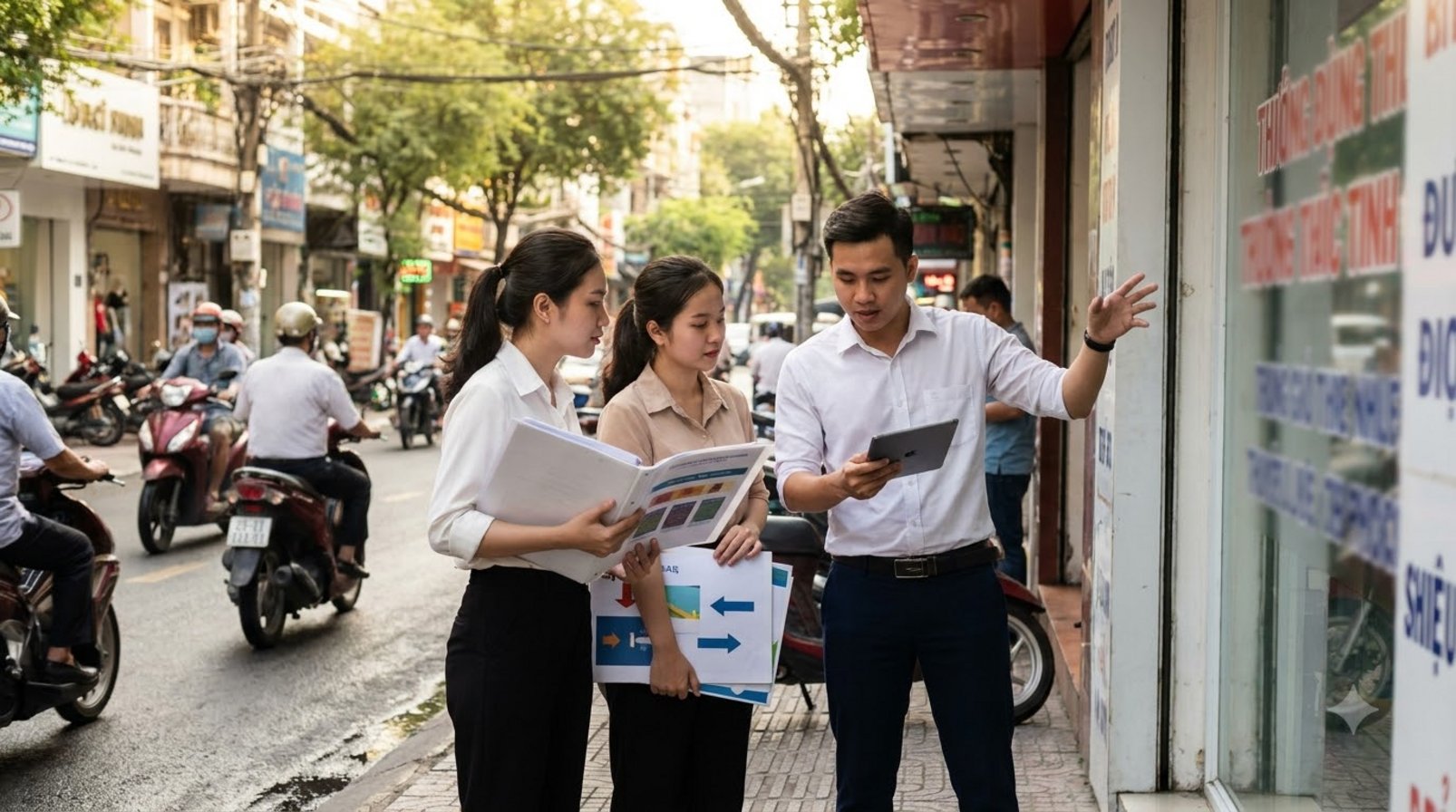
This is especially important for Vietnamese brands that want to go beyond the domestic market. When working with international partners, foreign agencies, global platforms, or awards juries, questions about content origin, AI’s role, and final responsibility will appear earlier and earlier. Businesses that prepare a transparent process in advance will save far more time explaining themselves than businesses that only chase publishing speed.
For Vietnamese marketers, the practical conclusion is this: do not ask whether AI can replace people; ask which parts of the workflow can be handed to machines, which parts must be reviewed by humans, and what evidence proves it. That is the real way to use AI to expand capability without eroding credibility.
What marketers need to do to use AI while keeping trust intact
- Audit the entire content pipeline to see where AI is involved, from ideation to publishing.
- Set a final approval rule for every asset involving AI, especially public-facing content.
- Keep records of edits and approvals so you can quickly explain them to leadership, partners, or platforms when needed.
- Prioritize AI use cases that improve productivity without blurring human creative roles and responsibility.
The deeper AI goes into production, the less the real question is about its ability to create content and the more it is about its ability to take responsibility. That is the line that will determine which brands use AI to grow, and which brands use AI to weaken their own trust.
See more marketing analysis and how-to guides at https://marketing365.vn.
Follow more analysis from Marketing365 to stay updated on the latest marketing trends.
Read more articles in the same category Digital Trends.
Reference sources
- Tech Times — BAFTA Opens 2027 Games Awards: AI Tools Permitted as Oscars Tighten Rules
- Metro.co.uk — Saber admit they use AI while denying they swapped lead writer for ChatGPT