
Contents
- DeepSeek-V4-Pro in the new AI model landscape: when tools have to do real work
- V4-Pro and V4-Flash updates directly affect how marketing teams integrate AI
- What mechanism is pushing the value of new AI models toward control and workflow?
- DeepSeek-V4-Pro in the Vietnamese context: workflow-friendly models will have the edge over big promises
- What marketing teams should do to choose a new AI model without locking themselves into one system
- References
DeepSeek-V4-Pro is not just another new model. The accompanying information suggests the AI race is shifting from showing off answer quality to deciding who can plug into workflows, who can control how the machine works, and who can reduce friction in real deployment. For Vietnamese marketers, this is a direct signal because AI selection criteria will increasingly look more like choosing an operations tool than picking a pretty benchmark score.
The notable point is not a single benchmark number, but the way DeepSeek positions V4-Pro in Expert Mode, API, OpenAI Responses API, Codex, and the mechanism for adjusting reasoning effort. Once a model starts entering real work, the question is no longer “is it smart?” but “does it fit the process, data, and the way the team already works?”
Key points
- DeepSeek-V4-Pro shows that new models are being positioned as work tools, not just chatbots to test.
- The ability to adjust reasoning effort and support Responses API reduces integration friction for both technical teams and marketing ops.
- The value of AI is shifting toward control, workflow fit, and how easily a tool can be replaced when it no longer fits.
- In Vietnam, the practical priority will be models that are easy to use, easy to control in output, and do not lock the team into a hard-to-change system.
DeepSeek-V4-Pro in the new AI model landscape: when tools have to do real work
DeepSeek announced V4-Pro with a very clear set of messages: agent upgrades, flexible reasoning effort, native OpenAI Responses API support, one-click setup for Codex, and deployment across app/web as well as API. The essence of these details is to make the model less “standalone” and easier to slip into workflows, rather than just sitting inside a chat window. The information comes from DeepSeek’s post and follow-up notes from TestingCatalog.
When a new model is described in the language of agents, API, and setup, it signals that the market is judging it by its ability to participate in real work. From a marketing perspective, this is a much bigger shift than simply asking which model answers better. Teams need to think about content flows, moderation, research, analysis, and task automation — all things that require the model to plug into existing systems.
An interesting detail is that DeepSeek keeps the model names unchanged in the API docs. For operations-minded users, this points to a familiar direction: reduce surface-level changes so users do not have to rewrite too many things that are already working well. In other words, the competition is not only about model capability, but also about how little it disrupts the current workflow.
V4-Pro and V4-Flash updates directly affect how marketing teams integrate AI
The most notable updates are the ones that can be checked immediately: adjustable reasoning effort, native OpenAI Responses API support, one-click Codex setup, and the fact that the model is available on app/web and API. These details appear in DeepSeek’s announcement and were repeated in Chubby’s response.
Adjustable reasoning effort: marketing teams get a new dial between speed and depth
DeepSeek says V4-Pro and V4-Flash allow reasoning effort to be set to low, high, or max. This is a practical change because not every task needs the model to think for the same amount of time. Fast drafting, lead classification, or handling internal requests may only need a low setting. More complex tasks such as insight synthesis, multi-layer analysis, or supporting agent workflows will need a higher setting. See the source in DeepSeek’s announcement.

For marketers, this dial matters because it turns AI into a tool whose cost and speed can be adjusted by task. Instead of choosing one model and using it for everything, the team can assign different levels by task. That is a more operations-oriented way of thinking than asking “which model is best?”
Responses API and Codex setup: integration friction is becoming a competitive edge
DeepSeek adds native OpenAI Responses API support and one-click setup for Codex. This is a sign that the technical layer around the model matters almost as much as the model itself. If AI has to enter a CRM, internal dashboard, moderation pipeline, or content analysis tool, fast integration will save a lot of deployment time. This was noted in the same DeepSeek announcement and emphasized again by TestingCatalog.
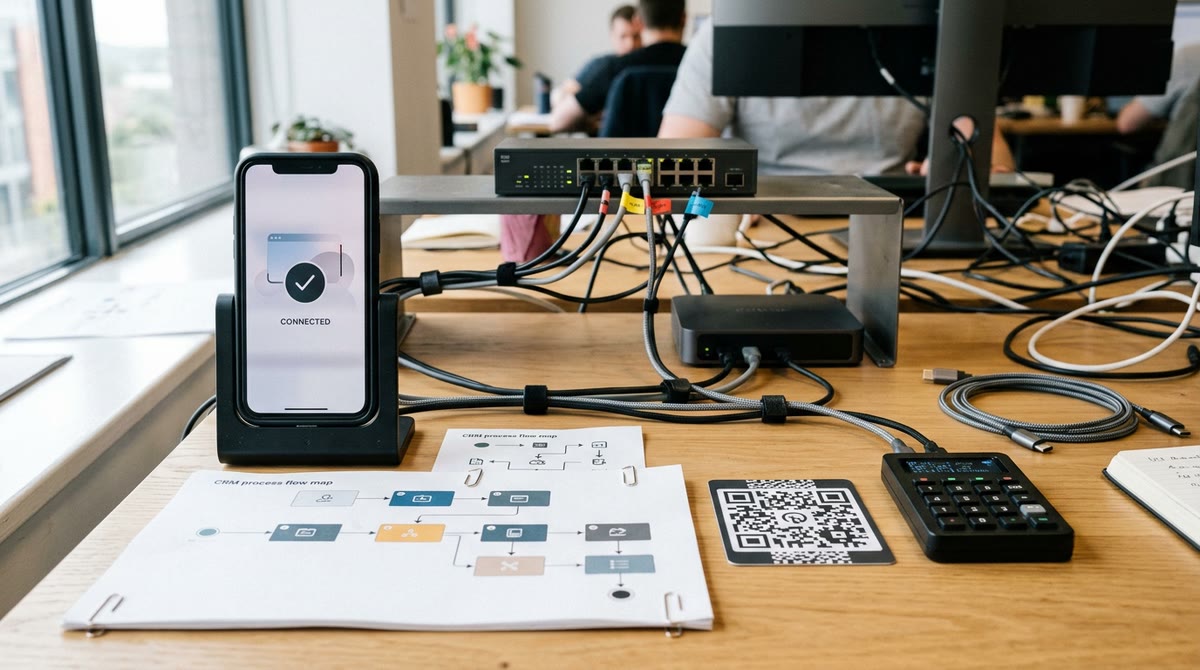
This says one thing very clearly: the model that is easier to connect to the existing stack will have a better chance of entering workflows. For marketing teams, that is why connection and control should be prioritized over simply believing claims about intelligence.
V4-Pro on app/web and API: AI products are being judged by how usable they really are
V4-Pro is now available on app, web, and API, and is also tied to Expert Mode so users can try it in specific contexts. DeepSeek and TestingCatalog both show this deployment direction. That makes the model feel less like a demo and more like a component that can be attached to a workflow.
For marketing teams, the lesson is clear: if an AI tool has no path into familiar workflows, it will remain at the experimental stage. When a model appears across multiple usage surfaces at once, the barriers to testing and switching go down.
What mechanism is pushing the value of new AI models toward control and workflow?
The two most prominent layers of signals from the sources are: on one side, DeepSeek-V4-Pro with flexible reasoning effort and API integration; on the other, market reactions around choosing AI tools not just for scores, but for their ability to plug into real work. Responses from Chubby, TestingCatalog, and even warnings about tool usage costs from Based all point to the same conclusion: the AI market is pricing control, integration, and workflow continuity more highly.
Switching costs are overtaking the feeling of “which model is stronger”
When a model already has an API, Responses API support, and quick setup for developer tools, the decision to choose AI depends less on reputation alone. DeepSeek shows that the path into real work is being optimized. Based, meanwhile, shows that real users are being pulled into multiple models at once through credits, quick testing, and real-time market data.

That means bargaining power is shifting toward the buyer. Teams can test quickly, compare quickly, and switch quickly if a model does not fit. In that context, AI products have to make replacement less painful. This is a major change for procurement and for marketers responsible for the tool stack.
Agent workflow is replacing benchmark tables as the decision standard
A point mentioned often in DeepSeek’s announcement is agent upgrades and reasoning effort levels suited to different tasks. At the same time, Tech Dev Notes raises questions about other launches in the AI ecosystem, showing that market observers are looking at product cycles and applicability, not just benchmarks. Once a model is placed into an agent workflow, the evaluation criteria change to: does it run reliably, does it require fewer fixes, and does it fit the process?
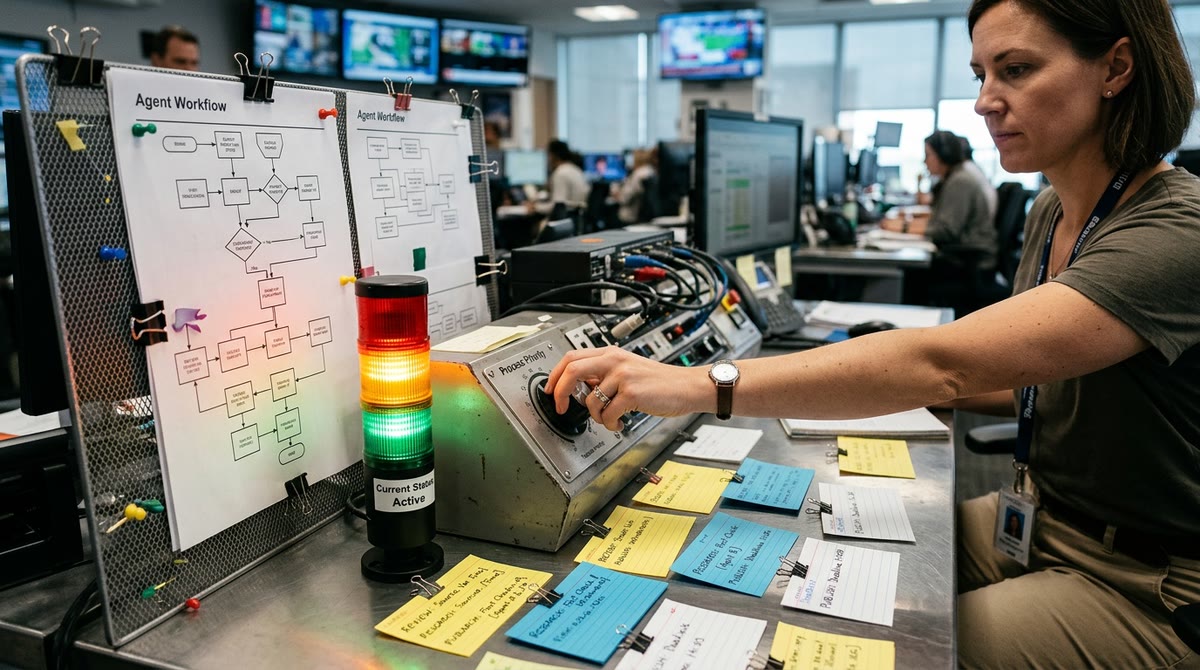
For marketing, this is where the mindset has to change. A model that answers brilliantly but cannot fit into internal processes may lose to a less flashy model that integrates more cleanly into the workflow. In other words, “good” is no longer a strong enough criterion.
AI value is moving from general capability to system fit
The sources above are not talking about a race to find “the smartest AI,” but about where AI can be plugged in: app/web, API, Responses API, Codex, data feeds, and agent workflow. DeepSeek, TestingCatalog, and Based all show that value now lies in how the model works inside a broader system. Once the market moves in that direction, a model’s brand alone is no longer enough to hold its position for long.
What marketers need to remember is this: if AI is bought for operational efficiency, it can be replaced very quickly when another option fits the system better or costs less.
DeepSeek-V4-Pro in the Vietnamese context: workflow-friendly models will have the edge over big promises
In Vietnam, most marketing teams do not buy AI to “collect models.” They buy it to write, analyze, plan, summarize, create content, and connect to the tools they already use. That is why the signal from DeepSeek-V4-Pro matters: it emphasizes API, Expert Mode, and adjustable reasoning levels — exactly the kind of features that reduce deployment barriers. Those signals come from DeepSeek and follow-up posts from Chubby and TestingCatalog.

In this market, three criteria will matter more and more: easy to test, easy to control output, and easy to switch if the tool no longer fits. For Vietnamese teams, this is an advantage because budgets often have to be balanced, workflows usually do not have much time for system changes, and content moderation requirements are fairly strict. A model that can be plugged quickly into an internal workflow will usually beat a model that sounds impressive but is hard to deploy.
It is also worth noting that AI tools are increasingly moving toward letting users test quickly with credits, data feeds, or special usage modes. This makes AI selection behavior in Vietnam less dependent on advertising and more dependent on real trial experience. In short, the Vietnamese market will not only ask which model is stronger, but which model disrupts work the least.
What marketing teams should do to choose a new AI model without locking themselves into one system
- Prioritize models with clear APIs, fast integration support, and the ability to switch to another tool if needed.
- Split tasks by importance: use low reasoning for simple work, and increase processing only for complex tasks.
- Check the output and how the model moves through the internal workflow before putting it into production.
- Choose tools based on how well they fit into the real system, not on brand name or a single score.
A deeper reading of DeepSeek-V4-Pro shows that the AI race is no longer just about who speaks better. It is becoming a race over who can reach real work, who can control how the machine runs, and who lets marketing teams keep the freedom to switch tools when needed.
See more marketing analysis and guides at https://marketing365.vn.
Follow more analysis from Marketing365 to stay updated on the latest marketing trends.
Read more articles in the same category AI developments.
References
- DeepSeek (@deepseek_ai) — We’re launching DeepSeek-V4-Pro today!
- TestingCatalog — DeepSeek announced DeepSeek-V4-Pro
- Chubby — DeepSeek-V4-Pro GA officially announced
- Based (@BasedOneX) — Based Infinity Launch Event
- Tech Dev Notes — Grok 4.6 released, Imagine 2.0 released