
Contents
- Key points
- What is the TikTok video distribution algorithm, and what is it deciding on your channel?
- How does TikTok test videos and expand distribution in stages?
- Which factors strongly affect TikTok video distribution?
- What should you do to give your videos a better chance of being distributed on TikTok?
- When should you review your content strategy instead of just fixing individual videos?
- How to read TikTok’s algorithm when optimizing TikTok SEO and sales content
- Frequently asked questions about tiktok video distribution algorithm
TikTok’s video distribution algorithm is the system that decides who sees your video, how widely it is shown, and for how long. It does not push content broadly right away, but first tests it with a small group of viewers, then uses signals such as watch time, completion rate, and engagement to decide whether to expand distribution.
Key points
- Videos are first tested with a small audience, and only expanded when early signals are strong.
- Key signals include watch time, completion rate, engagement, and early feedback.
- The algorithm prioritizes viewer experience; views are a result, not the direct goal.
- Unlike Facebook and YouTube, distribution on TikTok depends less on follower count or channel history.
- A video getting stuck with the first audience is a sign the content needs adjustment to improve retention.
When a TikTok video is posted but views stop at a small cluster, the issue often lies in the tiktok video distribution algorithm testing the content with the first audience. This mechanism does not “push broadly” right away, but relies on signals such as watch time, completion rate, engagement, and early feedback to decide whether to expand distribution.
This opening section helps shop owners, marketers, and channel managers understand how videos are tested with a small group, why some videos take off while others stall, and how to spot signs that distribution is slowing so you can adjust the content in the right place.
What is the TikTok video distribution algorithm, and what is it deciding on your channel?
TikTok’s video distribution algorithm is the system that decides which video is shown to whom, at what level, and for how long. It determines the initial reach, the test audience, the pace of distribution expansion, and how well the video matches each user segment.
A video is usually not pushed straight to the entire channel. The way TikTok distributes videos on For You typically follows a small test cycle first, then expands if the signals are good. For example, with the same 15-second clip, one video may stop with the first audience because viewers swipe past quickly, while another is expanded because it holds attention well and gets the right kind of reactions.
The key thing to remember is that TikTok’s algorithm tends to optimize for viewer experience first, and views are only the result. So the TikTok video distribution mechanism is deciding both whether the video gets tested again or stalls at the early stage.
How is content distribution on TikTok different from Facebook and YouTube?
TikTok prioritizes rapid testing based on early viewer reactions, while Facebook and YouTube rely more heavily on channel history, follower base, and users’ underlying behavior. As a result, even a new video can still be widely distributed on TikTok if it gets strong signals from a small audience right away.
A major difference is that video distribution on TikTok depends less on how many followers you already have. On Facebook or YouTube, the platform, subscriber base, and viewing history often have a stronger impact on distribution momentum.

Seen this way, channel owners will be less likely to apply the same optimization formula across every platform. Engagement signals, audience segments, and recommendation pools on TikTok need to be read as a testing loop, not as a one-and-done post.
Why is understanding the algorithm important for shop owners and marketers?
Understanding tiktok video distribution algorithm helps you identify where a video is failing: hook, retention, or CTA. Once you can see the bottleneck, you know whether to fix the opening, change the format, or adjust the audience segment.
For shop owners and marketers, this is a more grounded way to optimize a TikTok channel. Sales videos, educational videos, and traffic-driving videos all need the right viewer-retention signals; otherwise, it is easy to blame the platform incorrectly.
A quick checklist to self-check:
- If the video stops early, review the first 3 seconds and the opening line.
- If the video gets views but little engagement, review how well it fits the audience.
- If the video gets engagement but no conversions, review the CTA and message.
How does TikTok test videos and expand distribution in stages?
TikTok tests videos by showing them to a small audience first, then expanding, narrowing, or stopping distribution based on the initial response. That is why a video can rise quickly in the first few hours, then stall if the signals are not strong enough.
The flow is usually easy to see: post the video -> TikTok tests it -> measures the response -> decides whether to expand or keep it in a small loop -> continues evaluating. When creating content for a sales channel or brand channel, the hardest part is not whether you post consistently, but the first signal the video receives in the initial test cycle.
What signals does TikTok score in the early stage?
TikTok scores videos largely based on how viewers react as soon as the video is distributed, especially retention, completion rate, how long people pause to keep watching, and early interactions such as likes, comments, shares, or saves. A video that gets swiped away very quickly is usually weaker than one that holds viewers for the first few seconds, even if both are posted at the same time.
If you want to check whether your video is strong or weak in the first round, look at these 3 signs:
- Do viewers watch past the opening, or scroll away almost immediately?
- Does the video keep viewers watching through the middle, or drop sharply at the start?
- Do the interactions come from the right audience, or are they scattered and off-topic?
In TikTok’s video scoring and distribution mechanism, early signals usually matter more than simply “posting at the right time.” A weak opening, a slow lead-in, or a title/visual that creates the wrong impression will often cost the video a chance to be tested further.
When is a video pushed to a larger audience?
A video is pushed further when it continues to show strong signals after the first test round and TikTok sees that the content is clear enough to find more suitable viewers. Simply put, if TikTok’s video test distribution to a small audience still shows solid retention, low early drop-off, and relevant engagement, the system will expand it to larger audience tiers.

A common sign is that the video does not “explode” all at once and then stop, but keeps gaining in a few more distribution waves after holding good watch behavior. At this point, TikTok’s video recommendation algorithm for the right audience will prioritize groups whose behavior is similar to the viewers who reacted well in the first round.
A video often stalls when the topic is too broad, the opening is unclear, or the early signals are mixed: viewers watch briefly but do not stay, or there are views but no meaningful reactions. If the content is clear, easy to recognize, and the initial response is strong, the content distribution loop on TikTok will continue opening up new test rounds instead of stopping with a small audience.
Which factors strongly affect TikTok video distribution?
TikTok’s video distribution algorithm prioritizes signals that show the video is reaching the right audience, is engaging enough, and is strong enough to keep testing with a larger group. So it is best to check four layers: content quality, topic fit, viewer-retention metrics, and quality engagement signals.
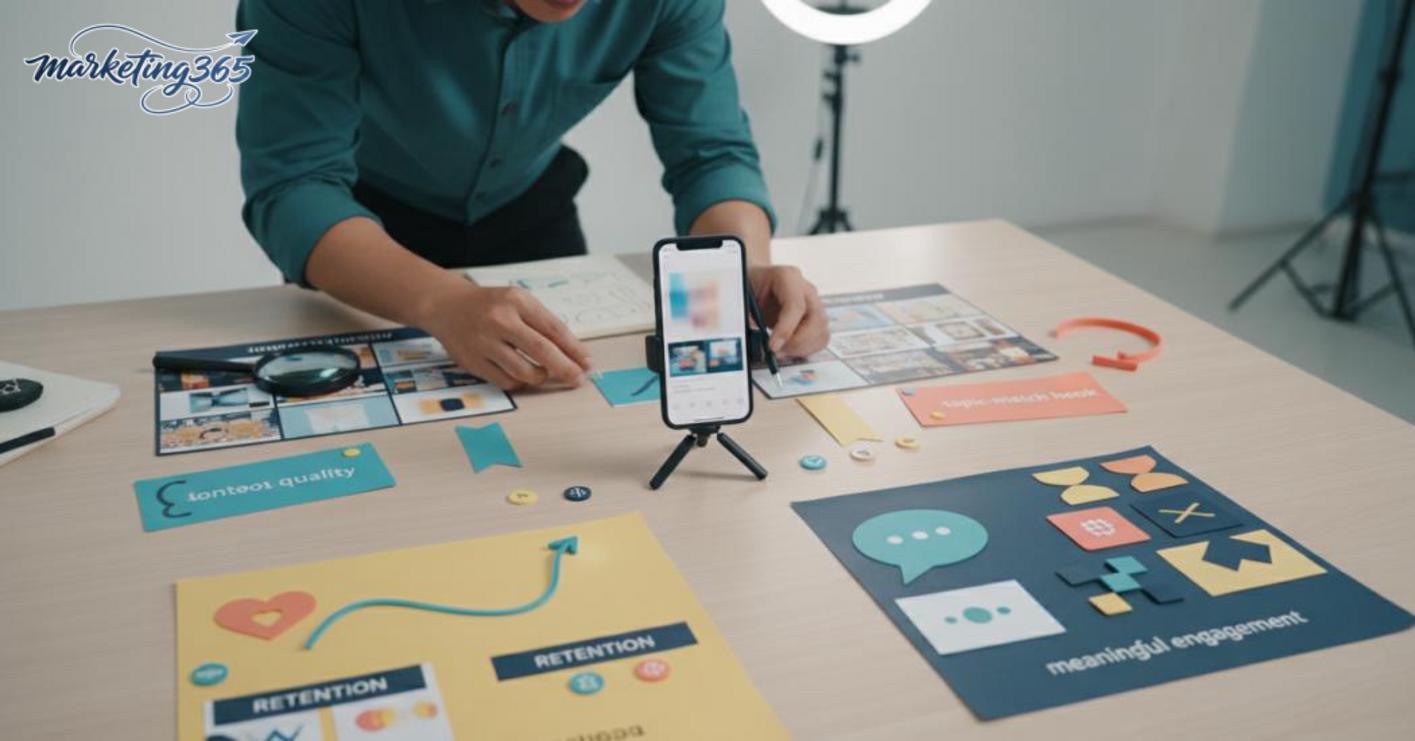
What does video completion rate tell TikTok?
Video completion rate shows whether viewers watch all or nearly all of the content, and it is a very strong signal in TikTok video distribution. Short videos are easier to complete, but longer videos can still be pushed if the opening is clear, the pacing is steady, and every section gives viewers a reason to keep watching.
When reviewing a video, look at 3 points:
- Does the first 3 seconds state the right problem?
- Does the pace change every 5–10 seconds?
- Is the ending clear enough that viewers do not leave early?
A 45-second video that rambles in the first 10 seconds often loses viewer-retention metrics, even if the topic fits the audience. By contrast, a 60-second video with a direct opening, quick cuts, and one clear idea often holds viewers better.
Which engagement signals matter most?
The most important engagement signals are replays, comments, shares, saves, profile clicks, and follows after watching. These are the interaction signals that show viewers are not just scrolling past, but reacting clearly to the content.
Do not overstate any single metric. An entertainment video may get many replays but few saves; a tutorial video may get fewer comments but more saves and follows. In TikTok’s video scoring and distribution mechanism, quality engagement is often stronger than superficial likes.
Quick checklist:
- Are people commenting because they want to ask for more?
- Is anyone sharing it with others?
- Are there saves from the right audience segment?
- Are people visiting the profile after watching?
Where must content and audience fit together?
Content and audience must align from the hook, caption, and opening visuals so TikTok’s video recommendation algorithm can identify the right audience. If a video is about sales tips but opens with a scene that feels too entertainment-heavy, the system will struggle to tier the audience and may test it with the wrong segment.
A common example is an educational video whose caption reads like a trend clip, or a sales video whose opening does not show the product, benefit, or use case. In that case, viewers leave quickly, and the early signals weaken.
Quick review:
- Does the hook state the main topic within the first 1–2 seconds?
- Do the visuals match the spoken words and caption?
- Who is this video serving: learning, entertainment, or buying?
- If you changed the title to a short sentence, would viewers still guess the content correctly?
What should you do to give your videos a better chance of being distributed on TikTok?
To give your videos a better chance of being distributed on TikTok, optimize three things before posting, track the right signals after posting, and remove errors that reduce viewer retention. The way a video goes viral through TikTok’s distribution algorithm usually starts with the early response from a small audience, so every detail from the hook to the caption affects TikTok video distribution.
What should you review before posting?
A video should have one clear topic, one main message, and an opening that is fast enough for viewers to understand what they are watching right away. If the first 3–5 seconds are still vague, TikTok’s video distribution algorithm will often struggle to get a strong signal from watch-through rate.
Read more: How to Handle Fanpage PR Crises Safely
Video optimization checklist before posting:
- Check whether the opening line states the right problem.
- Keep each video to one main idea and avoid stuffing in too many secondary points.
- Read the on-screen text again to make sure it is large enough, high-contrast, and not covering the frame.
- Listen to the audio again, especially the opening, to avoid muffling or distortion.
- Review the pacing of the cuts; any dragging section should be shortened.
A video with a clear topic, clear visuals, and clear audio will hold viewers better and support retention from the very first test audience.
After posting, which metrics should you track to know whether the video is being pushed?
A video that is being distributed well usually shows steadier view growth, natural comments, a slight increase in replays, and rising profile visits at the same time. If views are coming only from outside the platform and comments are very low, TikTok video distribution signals are not yet strong.
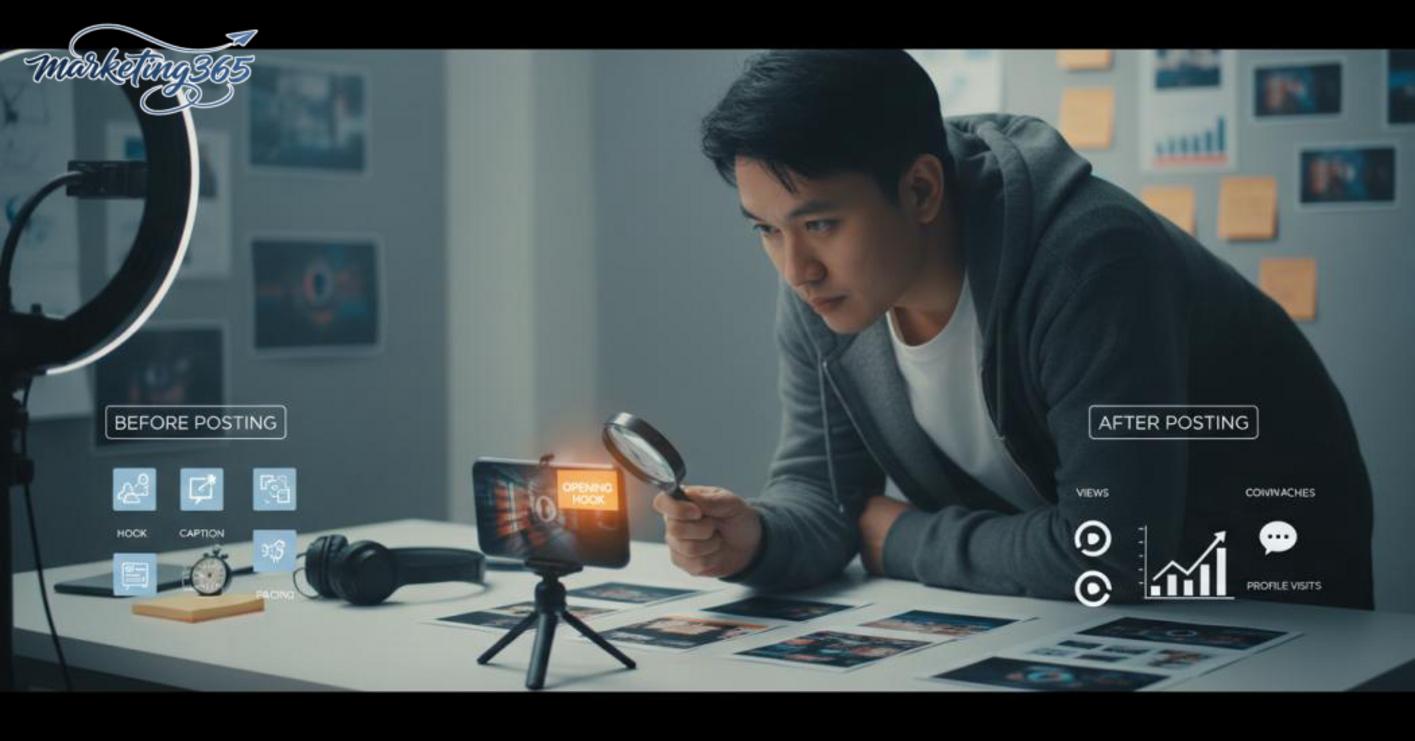
When tracking the distribution mechanism, look in this order:
- Views increase in clusters instead of staying flat for too long.
- Comments stay closely aligned with the video topic.
- Replay rate shows positive signs for short, easy-to-understand content.
- Profile visits increase after viewers watch all or nearly all of the video.
If a video stops early, go back to the hook and the first content segment the video is reaching. In many cases, the problem is not the entire content, but that the opening is not pulling in the right audience.
Which mistakes make videos harder to recommend?
Videos become harder to recommend when the hook is too long, the topic shifts midway, or the caption is vague enough that the algorithm cannot identify the context correctly. TikTok’s algorithm does not show what it does not understand clearly, so the more mixed the topic, the harder it is to reach the right audience.
Mistakes to fix immediately:
- An opening that rambles, with the main point still not reached after 5–7 seconds.
- Saying one thing while the visuals show something else.
- Using forced keywords or stuffing in irrelevant keywords.
- Posting frequently but making each video too different from the last.
The simplest fix is to keep one clear content axis, write captions that stay on topic, and review each video before posting to reduce TikTok video distribution errors from the start.
When should you review your content strategy instead of just fixing individual videos?
You should review your content strategy when the same problem repeats across multiple videos, while fixing individual videos is only suitable for isolated issues. If you focus only on tiktok video distribution algorithm and ignore the audience segment, topic, and channel positioning, you can easily optimize the wrong thing.
What signs show the problem is content, not the algorithm?
The problem is content when many videos get the same weak response, even though the title and posting style have changed. A video with a good hook but a retention drop early on, or videos that consistently score poorly on completion and engagement, usually indicate the content does not match user behavior.

- Videos are posted consistently, but views, comments, and saves remain low across many topics.
- The topic keeps changing, making tiktok video distribution algorithm unable to identify the right audience.
- The opening hook is fine, but the middle is too long, the pace is slow, and viewers leave early.
When you see these three signs, do not rush to conclude that video distribution is poor. Check the format, content angle, and consistency of the series first.
Should you optimize each video or rebuild the channel structure?
Fixing individual videos makes sense when the issue appears only in a few isolated videos, while repeated issues across many videos call for a review of your TikTok content strategy.
- If the issue is in the hook, caption, or thumbnail, fix each video first.
- If many videos drop at the same point, check the content pillar and audience segment.
- If the channel is covering too many topics, group them into a clear series with a defined goal.
Quick decision table:
- Fix the video: isolated issue, other content still performs.
- Change the format: same topic, but weak retention.
- Rebuild the channel structure: weak video distribution across the board, diffuse audience response.
When managing a digital channel, fix the root first, not just the symptoms. If the root issue is strategy, optimizing individual videos will only make the results less bad, not enough to lift the channel.
How to read TikTok’s algorithm when optimizing TikTok SEO and sales content
TikTok’s video distribution algorithm prioritizes signals about topic, retention, and fit with the initial audience segment. TikTok SEO only helps the system quickly identify which category the video belongs to so it can test distribution more accurately; it does not replace content quality or viewing behavior.
How does TikTok SEO support distribution?
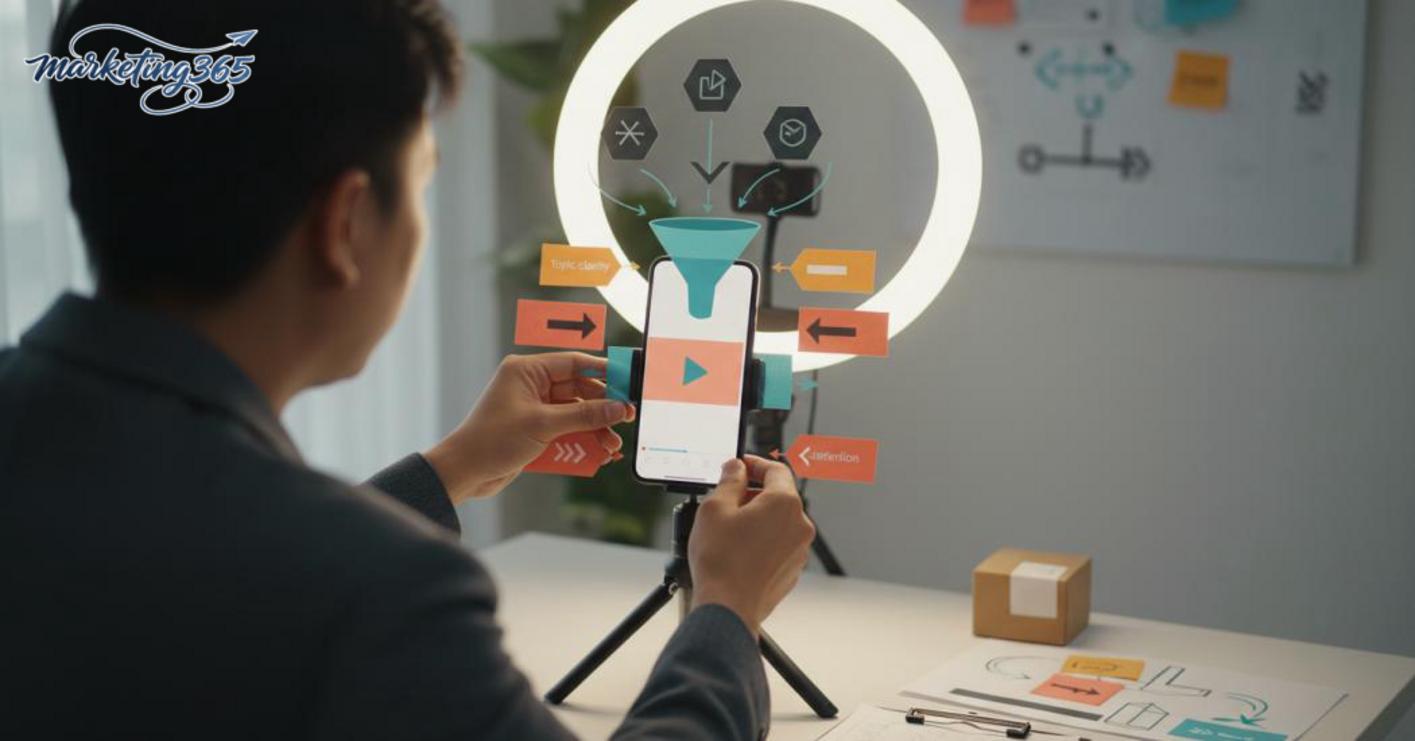
Optimizing TikTok SEO supports distribution by making the video’s topic clear in three places: the caption, on-screen text, and spoken words. When keywords appear naturally and match the actual content, the tiktok algorithm can more easily classify the video into a closer audience segment.
For example, a video about choosing office shirts should include the keyword phrase in the caption, on-screen text, and opening dialogue. If you only stuff in keywords while the content rambles, the system still reads weak signals. A more effective approach is to place keywords in the right context, then make sure the content answers what viewers are actually looking for.
What mistakes should sales content avoid to prevent reduced distribution?
TikTok sales content is easy to suppress in distribution when the opening is too obviously a hard sell or focuses only on price. A video should provide value first, then lead into the solution, proof, and call to action.
An easy structure to use is: state the problem, point out a common mistake, offer a fix, then introduce the product as one option. This helps keep viewers watching because they are not immediately being sold to in the first second.
Quick checklist:
- Open with the problem the viewer is facing.
- Use keywords naturally in the caption and spoken words.
- Avoid repeating price, promotions, or closing too early.
- End with a clear, short action that fits the context.
Frequently asked questions about tiktok video distribution algorithm
tiktok video distribution algorithm often prioritizes new content for testing, but a new video is only opened for testing if the initial signals are strong enough. In the early stage, the system looks at stop rate, watch-through, comments, and shares to decide whether to keep pushing it.
Does TikTok’s algorithm prioritize new videos?
Yes. New videos are usually tested with a small audience first, then expanded if the response is good. So a new video does not automatically get recommended; it needs a clear hook, the right audience, and enough retention in the first few seconds. A video posted at 9 p.m. can still stop early if the opening is weak.

Why is a posted video still getting few views?
The most common reasons are a weak hook, vague topic, mismatched audience segment, or low viewer-retention metrics. If the opening is slow and viewers swipe away quickly, the video scoring criteria will be poor and video distribution will slow down. A common case is good content, but the first 3 seconds do not clearly state the benefit, so views do not grow.
Should you repost old videos if you want more distribution?
Only repost when you have changed the angle, caption, or opening, because reposting mechanically rarely improves TikTok video distribution. Before reposting, check whether the old video failed because of the content, timing, or audience segment. If the cause was low quality, keeping the original unchanged usually will not improve the content strategy. Quick checklist:
- Fix the hook before reposting.
- Shorten the opening if viewers are dropping off early.
- Change the caption to match the topic.
- Only repost when there is a clear reason.
For official and up-to-date guidance, you can also refer to materials from TikTok for Business.
You can find more practical marketing guides at https://marketing365.vn.
Content from marketing365 is created for SMEs, online shop owners, and new marketers.
You can also read more articles on the same topic in the Social Media category.