
Contents
- Social media marketing changes roles as AI pulls manual work down and pushes control up
- What is changing in AI tools and content distribution is forcing social media to work differently
- Social media competes through process, not just content volume
- How social media in Vietnam will be judged by business results and message clarity
- What marketing teams need to do so social media does not get swallowed by machine-running
- Reference sources
Social media is no longer a place where posting consistently and running ads is enough. AI is reducing the manual work, but at the same time pushing responsibility into harder areas: controlling workflows, choosing the right distribution channels, and keeping content clear enough for both people and machines to understand. For Vietnamese marketers, this is a change that directly affects how content is made, media is bought, and performance is measured.
The question is no longer whether to use AI. What matters is how AI is reorganizing social media’s role across the entire marketing system: from a place to push posts to a place to generate signals, from a production layer to an operations layer, and from optimizing reach to optimizing clarity and machine readability.
- Key point:
- AI is pulling social media marketing from production tasks toward system control.
- TikTok, AI search and agentic commerce are all forcing marketers to write more clearly, measure more tightly, and rely less on instinct.
- Social media in Vietnam still matters, but it only works when tied to specific goals such as sales, recruitment, website traffic and reputation.
- Marketing teams will need new roles: the reviewer, the process designer, and the person who keeps consistency across multiple channels.
Social media marketing changes roles as AI pulls manual work down and pushes control up
Three sources point to the same trend: tools are doing more and more of the “do it for me” work, while people have to keep the “make the right decision” part. Social Media Examiner describes TikTok’s Agentic Hub, Symphony Creative Studio and Content Suite as a layer of tools that makes creating, managing and optimizing ads less dependent on Ads Manager operating skills. CMSWire, meanwhile, emphasizes that search is fragmenting because AI Overviews and LLMs are reducing referral traffic from Google, forcing brands to spread their presence across social, marketplaces and owned channels. ADWEEK adds another familiar paradox: more connection, but also more loneliness, meaning social media is not just a distribution channel but an environment that shapes perception and relationships.
When those three signals are combined, social media is no longer just “what should we post to get reach?” It is becoming an intermediate operating layer between AI tools, user behavior and business goals. Marketers who still work the old way will find the publishing part easier, but the work of standardizing messaging, checking outputs and deciding which content is actually worth distributing will become heavier.
This also explains why all the sources are implicitly pointing to one thing: speed is no longer the only advantage. Speed only matters when the workflow is solid enough that it does not need too much fixing afterward.
What is changing in AI tools and content distribution is forcing social media to work differently
This section looks only at the things that are already changing in day-to-day work. What they have in common is that they reduce friction, but do not remove responsibility.
Agentic Hub and MCP: advertisers have to know how far to let machines take over
TikTok for Business MCP connects AI agents such as ChatGPT and Claude directly to TikTok Ads Manager without requiring API credentials, code or complex integration; meanwhile, Agentic Hub is a marketplace for AI tools that support ad creation, management, analysis and optimization. This detail from Social Media Examiner shows that technical barriers are dropping very quickly. For marketers, the question is no longer “can it run?” but “how far can I let the machine go and still keep control?” Source

Symphony Creative Studio and Content Suite: short-form video production is no longer just the creative team’s job
These two tools sit inside the TikTok ecosystem and focus on creating short content, supporting ad creative, and helping marketing teams produce more variations without starting from a heavy manual process. When production speeds up, the team’s role does not disappear; it shifts to reviewing scripts, choosing the narrative angle and maintaining brand consistency. For social media, the hard part is no longer making the first video, but keeping quality intact as the number of variations grows. Source
Search is fragmenting: social media is no longer just a traffic feeder, but a place to maintain presence
CMSWire makes it clear that referral traffic from Google is being eroded by AI Overviews and LLMs, so brands can no longer depend on a single path. Social media therefore has to take on more responsibility for maintaining awareness, staying discoverable and pulling users back to owned channels when needed. ADWEEK adds another layer: social media does not just distribute content, it also shapes users’ sense of connection and attention. As traditional traffic weakens, the quality of touchpoints on social becomes even more important because that may be the first place users recognize a brand. Source 1 · Source 2
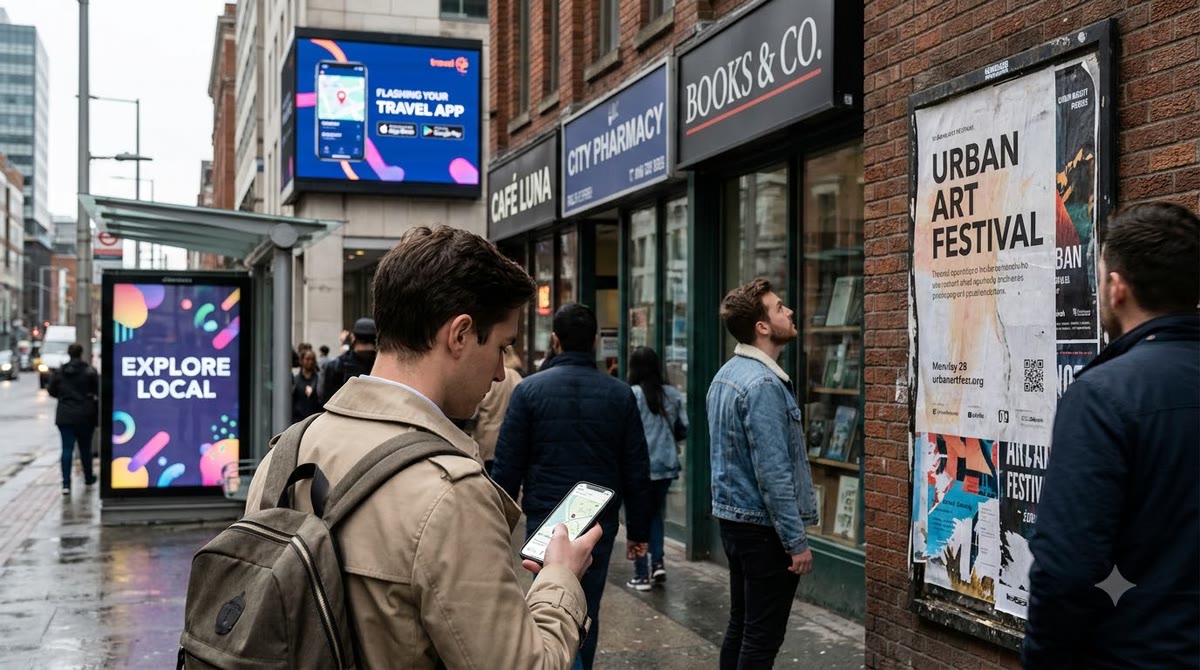
Social media competes through process, not just content volume
The biggest argument from the sources is this: social media marketing is being pulled out of the “make more posts” mindset and into the mindset of “design a more trustworthy system.” This is clearest in three mechanisms.
Content review costs rise when machines can create too fast
AI increases content creation speed, but that speed also increases the number of variations, narrative angles and brand voice risks. Social Media Examiner shows that tools can generate and optimize ads on their own; Pallet Enterprise, meanwhile, makes a very practical point: posting just to post is not a strategy, and social media is only useful when tied to sales, recruitment, website traffic and local reputation. Put the two sources together, and the new cost is clearly in review and filtering. Companies without a clear checklist will get pulled into fixing content errors instead of using content strategically. Source 1 · Source 2
Measurement shifts from reach to presence quality and the ability to connect to other channels
CMSWire shows that when AI search reduces traffic from Google, the old goal of simply optimizing clicks is no longer enough. Pallet Enterprise places social media into more verifiable goals: bringing prospects to the website, building sales relationships, recruiting the right people and staying top of mind until customers are ready to buy. For marketers, this means measuring social media with a single metric is very likely to distort the picture. The better way to read the problem is to measure social as a touchpoint in the journey, not as a machine for counting likes. Source 1 · Source 2

Content bargaining power is shifting toward context and clarity
ADWEEK says social media reflects a larger social paradox: people are connecting more, but still feel lonelier. That makes context more important than the number of posts. At the same time, CMSWire stresses that brand copy needs to be clearer, more literal and less ambiguous because AI agents can read and act on it on behalf of users. These two sources meet at one point: social media content cannot just be good in an internal creative sense. It has to be clear enough for real people to understand, and direct enough that other systems do not misunderstand it. Source 1 · Source 2
How social media in Vietnam will be judged by business results and message clarity
For the Vietnamese market, the lesson is not whether there is more AI, but whether brands are willing to change how they use social media. Many brands still treat social as a fixed posting calendar, while the real needs of Vietnamese businesses are often very specific: finding customers, finding candidates, driving users to the website, or maintaining reputation within a narrow local audience. In that sense, Pallet Enterprise’s reminder fits the Vietnamese context well: social media is only worth the money when it connects to a clear business goal.
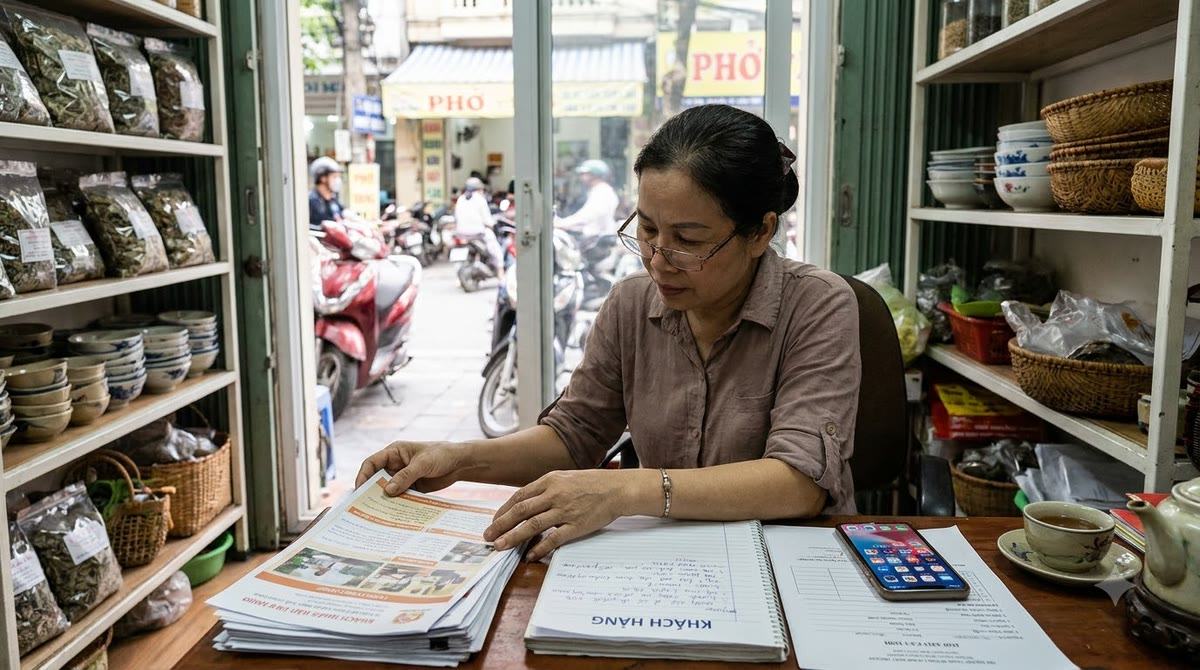
The second factor is the fragmentation of search behavior. When users read AI summaries, search through social, enter marketplaces or receive recommendations from AI agent, Vietnamese brands cannot optimize for just one channel. Content needs to be shorter, easier to understand and more consistent, because that is how you reduce loss between touchpoints. This also matches CMSWire: vague, ornate or overly “wordplay-heavy” copy will struggle in an environment where machines are increasingly reading and interpreting it.
Finally, there is the workflow issue. Vietnamese marketing teams are often small, so the more useful AI becomes, the easier it is to fall for the illusion that “automation is done.” In reality, as tools get stronger, the human decision layer becomes more important: who approves, what criteria they use, and which content is allowed to represent the brand on social.
What marketing teams need to do so social media does not get swallowed by machine-running
- Design a content review checklist for social media, including brand voice, claims, CTA and misunderstanding risk.
- Measure social media against real goals: website visits, leads, recruitment, sales support and brand recall, not just reach.
- Rewrite copy to be shorter, clearer and less ambiguous so it works in AI search and AI agent environments.
- Use AI to increase variations and speed, but keep humans in charge of narrative choice, review and linking content to business goals.
See more marketing analysis and how-to content at https://marketing365.vn.
Follow more analysis from Marketing365 to stay updated on the latest marketing trends.
Read more articles in the Digital Trends category.
Reference sources
- Social Media Examiner — Is AI Making It So Anyone Can Run Effective TikTok Ads?
- CMSWire — Is Your Brand Chasing the Wrong Marketing Goals?
- ADWEEK — What Primates Can Teach Us About Social Media Marketing
- Pallet Enterprise — Beyond Posting: How Pallet Companies Can Make Social Media Work in 2026