Contents
- What are one-month fanpage content ideas, and why plan with a 30-day framework?
- How to divide a month of fanpage content into easy-to-execute topic groups
- How do you turn 30 days into a fanpage posting calendar without repeating ideas?
- What kinds of ideas should a suggested day include so you don’t run out of topics?
- How to check whether a monthly fanpage content plan is actually usable
- When should you use a ready-made fanpage plan template, and when should you customize it?
- When should you seek professional support instead of handling fanpage content yourself?
- Frequently asked questions about one-month fanpage content ideas
When a fanpage’s posting schedule comes around and there still aren’t enough posts, the problem is usually not a lack of effort but a lack of a clear idea framework. Many shop owners and admins still have to come up with posts on the fly, so a 30-day posting calendar can easily break down, repeat topics, or drift away from sales goals.
This section focuses on one-month fanpage content ideas in a concise, easy-to-apply way: group topics, turn them into a monthly plan, and build a 30-day schedule without confusion. If you manage a fanpage for a small shop or a lean marketing team, you can use this framework to post more consistently, stay aligned with your goals, and know which posts to keep and which to drop.
What are one-month fanpage content ideas, and why plan with a 30-day framework?
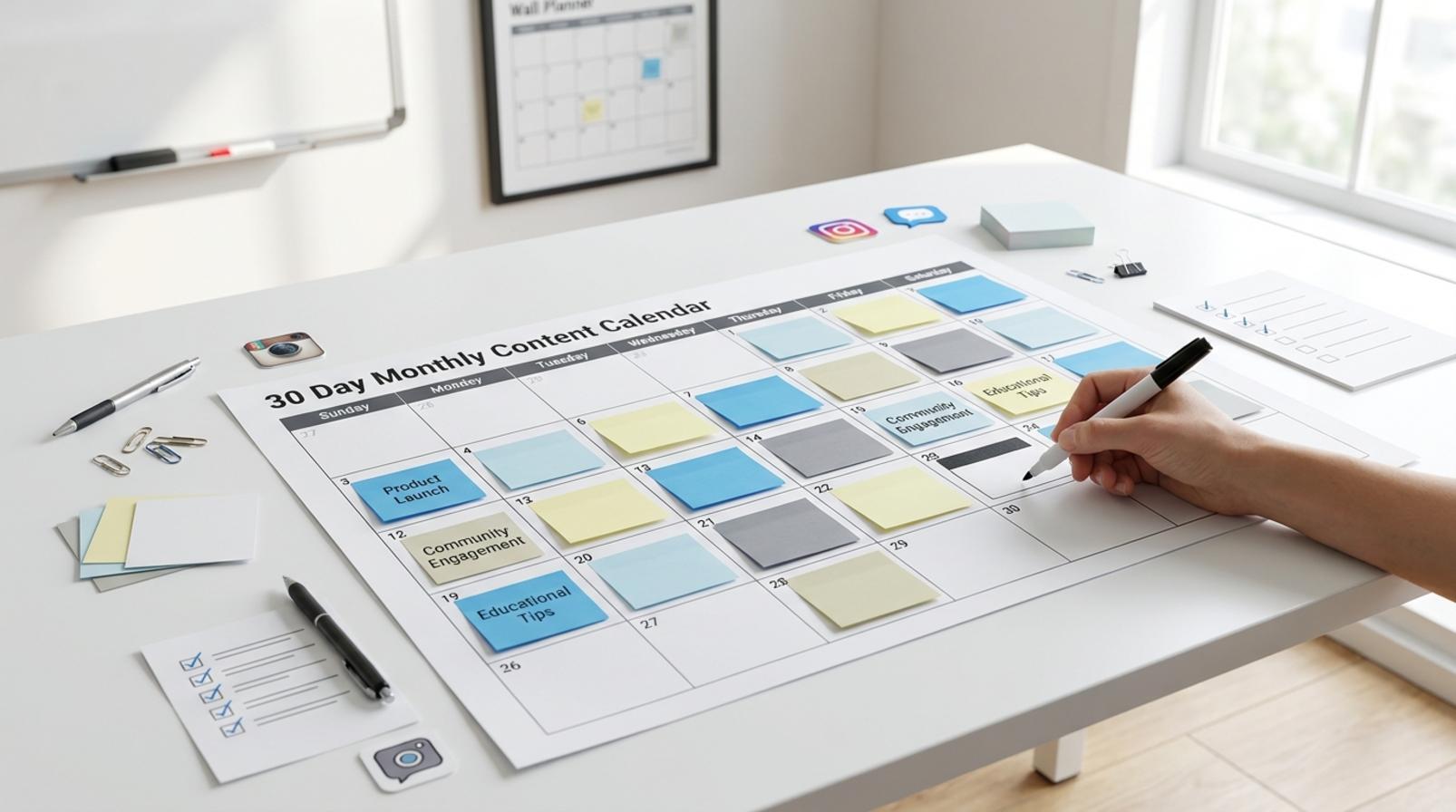
One-month fanpage content ideas are a 30-day outline that helps you know what to post each day, what goal each post serves, and which content group it belongs to. Planning with a 30-day framework gives your fanpage a steady rhythm, makes content easier to divide, and avoids the situation where one day is packed with sales posts and the next is silent.
This framework is useful because it turns posting from inspiration into operations. With a 30-day fanpage posting schedule, you can see which topics are missing over the month, which posts should build engagement, which should build trust, and which should close sales. As a result, a monthly fanpage content plan is no longer just about filling a quota; it’s about controlling quality week by week.
When does a fanpage need a monthly content plan instead of posting on inspiration?
A fanpage needs a monthly content plan when posting rhythm is off, fanpage post ideas keep repeating, or the team has no dedicated writer. A new fanpage should also have a 30-day framework to test which fanpage content topics keep viewers engaged, instead of posting randomly and only guessing at the cause later.
Situations that call for a 30-day content calendar include: a sales fanpage that needs to alternate sales content with engagement content; a fanpage whose comments are dropping; or a page preparing for a campaign, peak season, or product launch. In those cases, creating fanpage content on inspiration alone often leads to late posts, weak pacing, and poor coordination with design.

What operational problems does a ready-made 30-day framework solve for a fanpage?
A 30-day framework helps reduce duplicate ideas, keep posting consistent, and show which weeks lean more toward sales or engagement. It is also the easiest way to distribute fanpage content by week, from explainer posts and fanpage mini games to fanpage behind-the-scenes content and short-form video content for fanpages.
In day-to-day operations, this calendar also helps the design and video teams prepare in advance. Instead of thinking up content on the day of posting, you only need to look at the framework to know which week needs images, which week needs video, and which week needs engagement content to drive responses. A good fanpage plan template usually makes it immediately clear which posts build trust, which create conversation, and which support revenue.
How to divide a month of fanpage content into easy-to-execute topic groups
Dividing a month of fanpage content into topic groups keeps you from having to come up with 30 separate ideas every time you build a posting schedule. A 30-day calendar is easiest to execute when it has three clear pillars: sales, engagement, and education. This approach gives each post a specific goal and makes it easier to measure progress after one month through inbox messages, comments, and saves.
To break down one-month fanpage content ideas, you can follow these 4 steps:
- Choose the monthly goal. If this month needs sales, prioritize more sales posts. If you need to nurture your audience, increase engagement and educational content.
- List 3 content pillars. Each pillar should have 4–6 fixed ideas so you don’t run out of material.
- Assign posts by week. For example, week 1 can focus on introducing the problem, week 2 on sharing how-to content, week 3 on customer responses, and week 4 on closing with offers.
- Review the ratio. A workable calendar for a small fanpage is often 40% educational, 30% engagement, and 30% sales.
For example, for a cosmetics shop, you could structure the month like this: 1 post on choosing products by skin type, 1 comparison post between two product lines, 1 customer feedback post, 1 behind-the-scenes packing post, 1 fanpage mini game, and 1 promotional bundle post. When you repeat this framework each week, the page manager only needs to change the topic, the image, and the call to action.
Sales content group
The sales content group is used when you need to move readers toward an action such as sending a message, checking prices, or placing an order. Each post should start with a real customer problem, then introduce the most relevant product or bundle.
You can use 4 easy-to-execute post types: highlight benefits, before/after comparisons, customer feedback, and limited-time offers. For example, a water purifier sales post could open with a situation like “families with young children often drink tap water,” then present 3 benefits, and only then lead into the product.
If your fanpage still has few followers, you should only publish 2–3 sales posts per week. This frequency helps sales posts avoid diluting the page’s natural feel.
Content group for engagement and trust-building
Content that drives engagement and builds trust helps a fanpage generate steady responses and show signs of real activity. A short question, a poll with two choices, or a behind-the-scenes post often gets better comments than a long introduction post.
Read more: How to Plan Fanpage Content by Month
You can rotate 5 formats: either-or questions, fanpage mini games, experience sharing, packing behind the scenes, and answers to common questions. For instance, asking “Which step do you struggle with most when using the product?” will generate more comments than simply saying “this product is very good.”
This group also helps you identify topics your audience cares about so you can turn them into short videos or posts for the following week. If 20% of comments repeat the same question, that is a sign you should write a dedicated explainer post.
Educational/explainer content group
Educational/explainer content helps readers understand the issue before buying and forms the foundation for a more sustainable content plan. For one-month fanpage content ideas, this is the group that should make up most of the early-month posts.

Easy post types include: how to use the product, common mistakes, buying tips, checklists, choice comparisons, and simple term explanations. For example, instead of posting “new stock has arrived,” write “3 mistakes that make you choose the wrong product for oily skin” or “how to read basic ingredients before buying.”
A simple schedule is to place 1 educational post between 1 engagement post and 1 sales post. This rhythm helps the fanpage deliver value while still creating a natural opportunity to close sales without feeling overly promotional.
How do you turn 30 days into a fanpage posting calendar without repeating ideas?
One-month fanpage content ideas should be turned into a 30-day calendar by week, by content rhythm, and by format, rather than arranging disconnected topics on inspiration alone. The easiest method is to lock in the monthly goal first, then divide the content pillars, and then assign each group of posts to each week so you avoid repetition and avoid posting three posts of the same type in one week.
How to divide content by week so the fanpage has a steady rhythm
Each week should have a clear role in the monthly fanpage content plan so the 30-day posting calendar doesn’t feel flat from start to finish. Week 1 should be used for foundational topics and introductions, week 2 for deeper explanations, week 3 for driving engagement, and week 4 for conversion or summarizing the key points.
For example, if the month revolves around a product category, the first week could introduce the problems viewers are facing, the second week could explain how to choose, the third week could be Q&A or a fanpage mini game, and the fourth week could feature feedback, comparisons, or a closing sales post. When you create fanpage content by week, it becomes easier to spot which week is too sales-heavy or too explanation-heavy.
A quick checklist for reviewing weekly rhythm:
- Each week has one main goal.
- No two consecutive weeks use the same content type.
- Each week should have one main theme, with the remaining posts as close variations.
- If the industry needs market education, weeks 1 and 2 should include more explainer posts.
Which post formats should you choose so the monthly calendar doesn’t feel boring?
A 30-day fanpage posting calendar needs a mix of formats, because the same topic feels less repetitive when the format changes. A single image works well for short messages, a carousel works when you need to break down each point, short-form video for fanpages works for quick tutorials or behind-the-scenes scenes, while Q&A posts, feedback, and fanpage mini games help boost engagement between explainer posts.
An easy-to-apply approach is to avoid using the same format three posts in a row. For example, one week could follow this rhythm: a single image to open the week, a carousel in the middle of the week, and short-form video content for fanpages at the end of the week. If you need fanpage post ideas, prioritize changing the format before changing the topic, because in many cases posts feel repetitive simply because they are presented the same way.

When reviewing the calendar, just check three things: which format appears too often, which posts repeat the same opening structure, and which week lacks engagement-driving content.
What kinds of ideas should a suggested day include so you don’t run out of topics?
A 30-day posting calendar is easier to build if you group ideas instead of forcing 30 completely different topics. This approach lets you rotate content around products, services, real experiences, and engagement, keeping the posting rhythm steady without running out of topics. With one-month fanpage content ideas, the goal is to have a broad enough topic set to adapt by industry while still staying aligned with viewer needs.
Ideas centered on products, services, and customer pain points
This group is the backbone of sales fanpage content because it addresses the main reason people follow a fanpage: they want to know what the product solves. You can build around features, benefits, FAQs, choice comparisons, before/after use, suitable use cases, and common mistakes when buying or using. For example, a service fanpage could post “who should use the basic package and who should choose the advanced package” instead of only posting a general introduction.
Read more: How to Build a Zalo Community from Scratch
When planning post topics, prioritize three questions: where is the customer hurting, what are they unsure about, and what usually blocks the purchase decision? A 30-day fanpage posting calendar can repeat this group in different variations: one day answer questions, the next compare options, another day show a before/after situation or common mistakes.
Ideas centered on experience, behind the scenes, and trust
This group helps the fanpage feel real and reduces the distance between the brand and the audience. Fanpage behind-the-scenes content is often effective when you show the workflow, packing, order preparation, how urgent requests are handled, customer feedback, or team stories. With this kind of content, readers see how you work, not just your advertising claims.
A simple trick is to take one real workday and split it into multiple fanpage post ideas: a warehouse photo, a short note about checking orders, a situation involving a problem that came up, and then a customer response to close. This is especially well suited to engagement fanpage content because it feels approachable and builds trust without needing overly elaborate content.
Ideas centered on engagement, light entertainment, and comments
This group is used to keep engagement steady, especially on days when the fanpage doesn’t have strong sales content. Easy formats include choice questions, two-option polls, fanpage mini games, true/false situations, short Q&A, or trends if they genuinely fit the industry. The key is moderation, because trends that don’t match the brand voice may generate short-term engagement but are hard to sustain in follower quality.

If you need a simple framework for weekly fanpage content, alternate between an opinion question, a scenario post, and light entertainment. This keeps fanpage content topics from feeling dry while also giving you enough data to see what the audience cares about before pushing sales posts.
How to check whether a monthly fanpage content plan is actually usable
A monthly fanpage content plan is only “usable” when it balances goals, formats, posting rhythm, and still leaves room for adjustments after monitoring feedback. If the calendar only has enough posts but lacks engagement posts, lacks content that supports buying, or repeats ideas too often, it will quickly fall out of rhythm.

Checklist before finalizing the monthly posting schedule
A fanpage plan should be finalized in this order: enough content groups, an alternating rhythm, and no overload of one type of post. When reviewing the 30-day fanpage posting calendar, check these 5 points:
- Does it include enough introduction, engagement, sales, and trust-building content?
- Are engagement posts placed between sales posts?
- Does any format repeat more than 2 times in a week?
- Is each week too dense or too sparse for the available resources?
- Which posts need images, short-form video, or fanpage behind-the-scenes content to be easier to understand?
If one week is all closing posts, that calendar is usually very hard to keep readable.
Signs the plan is too sales-heavy or too scattered
A monthly fanpage content plan fails when it serves only the poster, not the reader. The clearest signs are that sales fanpage content appears too often while engagement fanpage content is almost absent; or every post changes topic, so the fanpage never builds a recognizable rhythm.
Fix it immediately by redistributing fanpage content topics by week, adding explainer posts before closing posts, and merging repeated ideas into a different format. If readers can’t tell which post helps them understand, which post helps them ask questions, and which post helps them buy, the calendar is not usable yet.
When should you use a ready-made fanpage plan template, and when should you customize it?
A ready-made fanpage plan template is useful when you need to move quickly, but if your business goals or content resources are different, you need to adjust it. The right choice depends on how simple the industry is, how much content you can produce, and your actual posting frequency.

When can you use a template to save time?
Read more: How to Build an Effective Zalo Community
A fanpage plan template is suitable when the fanpage is still small, the team is lean, and you need a rough posting schedule for quick assignment. For simple industries that already have a set of one-month fanpage content ideas, you can take a 30-day content calendar framework and swap in a few fanpage post ideas to match the product instead of building everything from scratch. This is especially useful when you need to finalize the 30-day fanpage posting schedule before the new workweek begins.
When do you need to customize for your industry and specific goals?
You need to customize when products have different buying cycles, services require more explanatory content, or the fanpage is running a sales campaign, fanpage mini game, or short-form video content for fanpages. If you copy the template as-is, the posting schedule will drift away from the goal: you may end up with too much engagement fanpage content but too little sales fanpage content, or not enough fanpage behind-the-scenes content to build trust. For teams with different design, video, and staffing resources, the monthly fanpage content plan must also change according to real resources; you cannot keep one rigid framework for every stage.
When should you seek professional support instead of handling fanpage content yourself?
Professional support makes sense when the fanpage starts lacking writers, designers, or someone to keep the posting rhythm consistent. At that point, handling fanpage content yourself often causes posts to drift from the goal, miss deadlines, and lose consistency in quality.

The clearest sign is that you have ideas but not enough time to turn them into finished posts. For example, you may already have several fanpage content topics each month, but by the end of the week you still haven’t produced a 30-day fanpage posting calendar, or the team keeps having to write in a rush day by day, causing repetition.
Some situations where outsourcing or support is worth considering:
- You need a clearer monthly fanpage content plan with a rhythm of sales posts, engagement posts, and trust-building posts.
- The fanpage needs more short-form video content, but the internal team has no one to edit or write scripts.
- You still post consistently each month but lack new fanpage post ideas, causing engagement fanpage content to decline over time.
If your goal is to save time and keep operations stable, prioritize a team that can handle the full fanpage plan template, from ideas to scheduling and visual coordination. But if you still have enough people, enough time, and only need a few fanpage content topic suggestions, doing it yourself is the more streamlined option.
Frequently asked questions about one-month fanpage content ideas
How many posts should a fanpage publish in a month? A suitable frequency is usually 12–20 posts, depending on content production capacity and audience engagement levels. If the team is small, prioritize consistency before increasing volume, because a fanpage that posts heavily but lacks topics often sees lower quality.
Which content group should a sales fanpage prioritize? Divide the ratio into 3 groups: sales content, trust-building content, and engagement content. For many retail pages, the trust-building group should appear consistently through feedback, behind-the-scenes content, product usage guides, or answers to common issues. This helps the 30-day fanpage posting calendar avoid becoming “all sales.”
Can one fanpage plan template be reused for multiple fanpages? Yes, but only the framework should be reused, not the exact content. A monthly fanpage content plan can keep the same structure, then change the goal, customer persona, fanpage content topics, and tone for each page. For example, the same week could include an introduction post, short-form video, fanpage mini game, and a closing sales post, but the writing should be different.

How do you know the plan is off track? If two consecutive weeks contain only sales posts and no engagement fanpage content or short-form video content for fanpages, the audience will likely get fatigued. In that case, review the weekly fanpage content, remove repeated ideas, and add a group of explainer, comparison, or objection-handling posts. That is how to keep one-month fanpage content ideas dense enough while still easy to execute.
For the latest official guidance, you can also refer to materials from HubSpot Blog.
Related articles
You can find more practical marketing guides at https://marketing365.vn.
Content from marketing365 is created for SMEs, online shop owners, and new marketers.
You can also read more articles on the same topic in the Social Media category.