Contents
- How to plan fanpage content by month: what goal should you start with?
- How should you divide fanpage content pillars so you never run out of ideas?
- How do you turn a monthly plan into a weekly and daily fanpage posting schedule?
- What kind of idea should each day in the fanpage content calendar have?
- How can you check whether a fanpage content plan is actually usable?
- When should you use a ready-made fanpage content plan template, and when should you customize it?
- Common mistakes to avoid when planning fanpage content by month
- Frequently asked questions about how to plan fanpage content by month
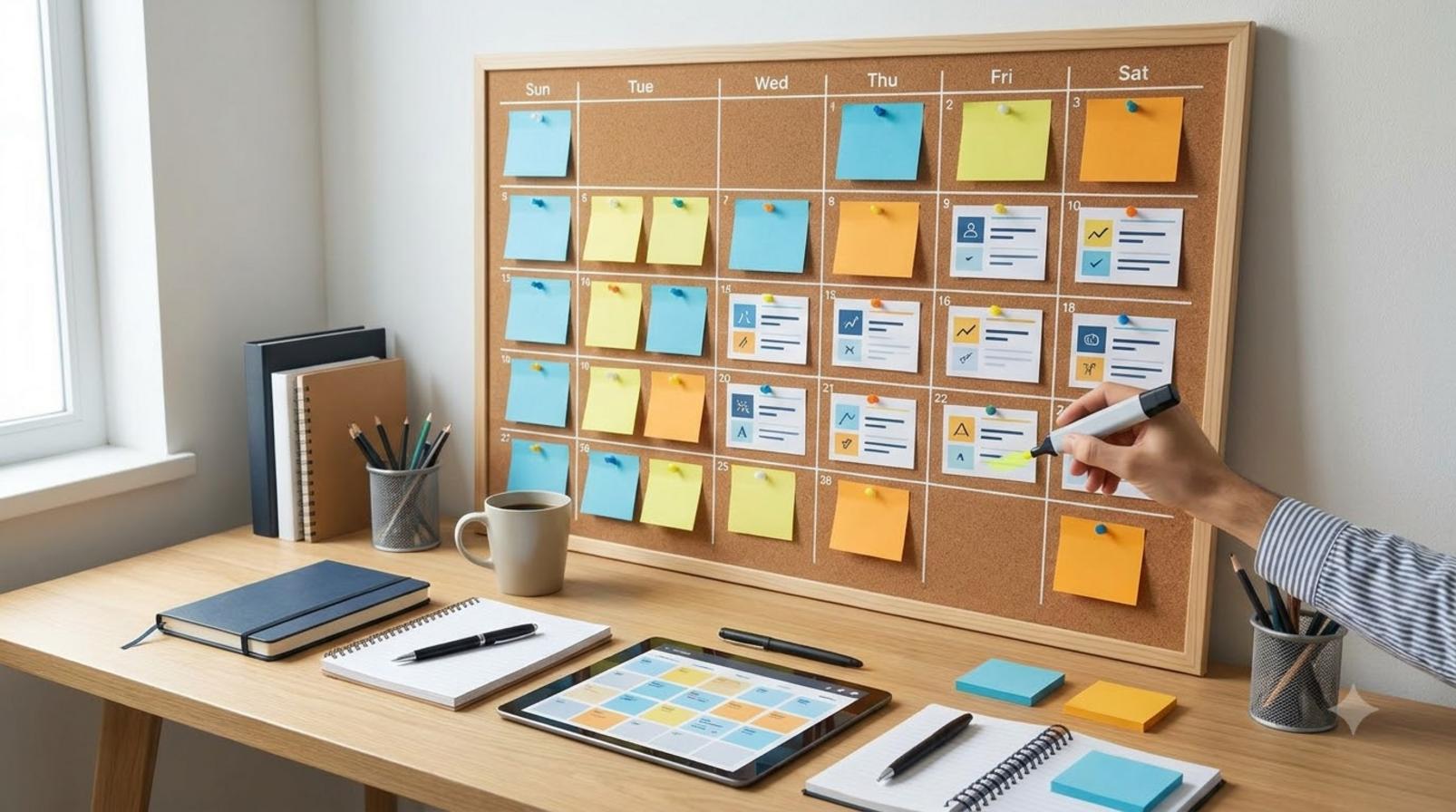
When post ideas are scattered across notes, a fanpage can easily publish on impulse, repeat topics, or drift away from its goals. How to plan fanpage content by month helps you see each week clearly, divide content pillars, balance sales posts with engagement posts, and control the publishing calendar before you post.
This section is for fanpage admins, content creators, and shop owners who run their own channels. The focus is on how to build a monthly plan yourself so it can be applied to many different types of fanpages. You will define goals, allocate topics by week, and check the consistency of the monthly fanpage content calendar with an easy-to-apply process.
How to plan fanpage content by month: what goal should you start with?
How to plan fanpage content by month starts with the goal, then the ideas. If you lock in the right goal first, your posting schedule will have a clear post mix, be easier to measure, and avoid posting just for the sake of it.

To do it properly, follow these 3 steps:
- Identify who the fanpage serves and what stage they are in.
- Choose 1 main goal and 1 secondary goal for the whole month.
- Divide the posting schedule by content pillars tied to that goal.
Who does your fanpage serve, and what stage are they in?
A fanpage should be planned around the main audience segment and their buying stage. New audiences need posts that explain the problem, introduce benefits, and build trust. People who are considering need comparison posts, objection handling, and answers to questions. Existing customers need updates, offers, and real case studies.
You can check quickly with 3 signs. If posts get many views but few inbox messages, the audience is usually still cold. If viewers often ask about price, differences, and how to use it, they are in the consideration stage. If customers respond quickly to offers and after-sales content, this group is close to deciding or has already bought before.
For example, a cosmetics shop may find that 70% of comments ask “is it suitable for oily skin?” and “when should I use it?” In that case, the month should include more posts explaining benefits, usage instructions, and product comparisons, rather than too many hard-sell posts.
Which goal should come first when building a monthly content calendar?
Each month should prioritize only 1 main goal and 1 secondary goal so the fanpage content calendar does not become diluted. New fanpages often prioritize audience growth and engagement. Fanpages that already have engagement but no sales should prioritize sales support. Fanpages with traffic but lacking trust should prioritize explanatory content, proof, and objection handling.
Lock the goal in with 4 short questions:
- This month, do we need more inbox messages, more sales, or more awareness?
- Which KPI matters most: messages, comments, or saves?
- Which type of post has performed best in the last 30 days?
- Where do customers usually stop: they do not understand, do not trust, or have not decided yet?
Once you have the answers, assign a post ratio to each goal. For example, if the main goal is to drive inbox messages, use 40% sales posts, 30% Q&A posts, 20% proof posts, and 10% light engagement posts. If the main goal is audience nurturing, you can prioritize 40% how-to posts, 30% experience-sharing posts, 20% engagement posts, and 10% sales posts.
How should you divide fanpage content by month so it is easy to execute?
Dividing the schedule by content pillars is easier than planning by inspiration. Each pillar should have a clear role: attract, build trust, convert, or retain the audience. When building the schedule, tie each post to a specific action such as commenting, sending a message, checking the price, or reading more.
The practical approach is:
- List 3 to 4 content pillars that fit the product.
- Assign a number of posts to each pillar based on the monthly goal.
- Arrange the schedule by week so each week has enough awareness posts, trust-building posts, and conversion posts.
For example, a course fanpage could divide the month into 4 weeks. Week 1 posts about the problems learners are facing, week 2 posts short how-to content, week 3 posts real case studies, and week 4 posts a registration close or offer post. This approach helps viewers move through each step before buying.
To measure effectiveness, do not look only at likes. Track comments, inbox messages, saves, and conversions from each type of post as well. If a how-to post gets many saves but few inbox messages, it is doing a good job of nurturing the audience. If a proof post gets many messages, that is a sign you should increase the share of similar posts.
How should you divide fanpage content pillars so you never run out of ideas?
Dividing fanpage content pillars means grouping all ideas into 3–5 fixed topic clusters so monthly planning is easier and posts do not repeat. Once you have this framework, how to plan fanpage content by month shifts from “what should I post today?” to “which content goes into the right chosen pillar?”
How many pillars is the right number for one fanpage?
The number of pillars should be enough to cover reader needs, but not so many that the schedule becomes messy. Small fanpages usually only need 3 pillars: product/service, customer problems, and trust proof; fanpages with multiple product lines can use 4–5 pillars to separate groups more clearly.
A quick check is this: if you cannot name each pillar in one short sentence, you are splitting too broadly. On the other hand, if every post is forced into one group, the monthly fanpage content calendar will quickly run out of ideas because each post type has no separate path.
How do you balance sales content and engagement content?
The ratio between sales content and fanpage engagement content should lean toward audience nurturing first, closing later. If you post too many sales posts in a row, viewers will only see pitches and will not have enough reason to trust or remember you.
A practical rhythm is to alternate conversion posts with posts that help readers understand the problem, see your expertise, and respond. For example, in a fanpage content calendar, you can schedule 1 sales post, 2 value posts, and 1 engagement or Q&A post to keep the fanpage post-topic distribution steady.

Can you use different post types for each pillar?
Each pillar should be tied to a few fixed formats so weekly fanpage post planning is faster. The product pillar works well with benefit-introduction posts, experience posts, and objection-handling posts; the customer-problem pillar works well with Q&A posts and knowledge-sharing posts; the trust-proof pillar works well with proof posts, feedback, and real case studies.
If you need fanpage post ideas for the whole month, combine pillars with formats using this checklist: 1) explanatory post, 2) comparison post, 3) illustrative post, 4) engagement post. This keeps the fanpage content plan template from being overloaded with just one content type and makes fanpage content effectiveness easier to measure.
How do you turn a monthly plan into a weekly and daily fanpage posting schedule?
How to plan fanpage content by month effectively means moving from a 30-day framework to weeks, then locking in each day so the schedule is easier to maintain and less repetitive. This helps you tie each post to a goal, distribute topics more clearly, and vary the content rhythm by week instead of packing ideas into one continuous stream.
Should you plan by week first or map all 30 days at once?
Planning by week first is usually easier to control because you only need to handle 5–7 posts at a time before assigning exact publishing dates. For small fanpages or small teams, this helps avoid the situation where the schedule is built but production cannot keep up. If the month has many campaigns, map the whole month first to see the major milestones, then break it into a weekly content plan. For example, the first week prioritizes awareness, the middle weeks push proof, and the final week adds light sales posts.

What kinds of posts should a week include so the rhythm does not feel flat?
An effective week should include multiple content layers instead of posting the same type of content repeatedly. You can mix knowledge posts, proof posts, engagement posts, and light sales posts in flexible proportions, as long as you do not spend three straight days only introducing products. When planning weekly fanpage posts, arrange posts with different levels of weight: early in the week, open with a problem post; midweek, use an explanation or case study; at the end of the week, use an engagement or demand-closing post. This keeps the posting rhythm more natural and prevents the content calendar from feeling dry.
Do you need to lock in posting times when building the monthly schedule?
Posting times should be an initial reference layer, not something to optimize too early. When building a monthly fanpage posting schedule, you only need to choose a stable time slot so it is easier to measure, then monitor the response after posting. If posts on the same topic are moved to different days, engagement may vary because the content quality is different, so do not jump to conclusions from just a few posts. What matters more is consistency, and only then should you use data to adjust the monthly fanpage content calendar.
What kind of idea should each day in the fanpage content calendar have?
Each day in the fanpage content calendar should have a different type of idea so the monthly schedule has rhythm and does not feel dense yet empty. How to plan fanpage content by month effectively often starts by dividing days by role: a day to open a topic, a day to provide value, a day to create engagement, and a day to push light conversion.

For fanpages that still lack data or staff, prioritize easy-to-produce fanpage post ideas first. A monthly fanpage content calendar should include a few experience-sharing posts, some Q&A posts, a few roundup posts, and only then alternate in sales content. The first day of the week works well for a directional post or a short checklist. Midweek works well for explanation, how-to, and comparison posts. The end of the week should be lighter, such as an open question, recap, or relatable content to maintain engagement. If you need to push light conversion, use a problem post and then suggest a solution, rather than posting a sales message too early. When building a monthly fanpage posting schedule, treat the day of the week as a suggested framework, not a rigid formula; the same Monday can still be a case study if that week’s audience needs that information.
Which content types should be repeated on purpose?
Intentional repetition means rotating content to reinforce recall, not reposting the exact same thing because you ran out of ideas. Some topics should appear multiple times in a 30-day fanpage content plan, but each time with different examples, context, or explanatory angles. For instance, the same problem can be turned into a how-to post, a common mistakes post, and then a short Q&A post. This helps distribute fanpage post topics more evenly and avoids the feeling that the month is only talking about one thing. When reusing a topic, change the format and the goal: explain today, compare next week, and use a real situation the week after.
Which content types make a fanpage feel diluted or boring?
A fanpage feels diluted when the monthly schedule has too many generic posts, too many sales posts, or content that does not match the audience’s real needs. The signs are easy to spot: every post sounds the same, follows the same structure, and fanpage content effectiveness shows no clear signal beyond scattered views. If 3–4 consecutive posts only say things like “great,” “good,” and “you should do this” without examples, the schedule will quickly lose quality. You should also avoid changing topics constantly based on impulse, because followers will not understand what the fanpage is strong at. When content starts to feel boring, cut back on promotional posts, increase posts that explain real needs, and rebalance the ratio of sales and engagement content on the fanpage.
How can you check whether a fanpage content plan is actually usable?
A fanpage content plan is usable when it clearly answers the goal, audience, content pillars, posting schedule, and measurement method before anything is posted. If a plan is still vague in any of these areas, it will usually drift off-message, be hard to produce, or fail to generate data for adjustments.
What checklist should you review before putting the plan into action?
A good content plan checklist should tell you whether the plan is ready to run for 30 days. When reviewing the posting schedule, check in this order:
- Is the goal clear: increase engagement, drive inbox messages, or nurture the audience?
- Has the customer audience been described in enough detail: who reads, what they care about, and what stage they are in?
- Have the content pillars been divided evenly: sales, education, trust, engagement?
- Do the post formats match the team’s resources: images, short videos, text posts, carousel?
- Does the posting rhythm really make the monthly fanpage content calendar visible, or is too much packed into one week?
- Is the ratio of sales content and fanpage engagement content leaning too heavily toward sales?
- Can the team produce consistently for 4 weeks, or is the plan beyond execution capacity?
Even one unclear area is enough to make a 30-day fanpage content plan hard to run consistently.
What signs show the content schedule needs to be adjusted?
The content schedule needs adjustment when posts repeat the same idea, audience responses are weak, or the team is constantly late in production. This is a sign that the plan is ineffective, not just that one post is bad.
Easy-to-spot signals include:
- The same topic appears repeatedly within one week.
- Sales content appears too often, making the fanpage feel less natural.
- Comments contain few real questions and are mostly polite reactions.
- You planned weekly fanpage posts, but by the end of the week you still have to cut posts because they were not finished in time.
- Engagement rates keep dropping even though posting frequency stays the same.
When these signs appear, adjust the fanpage post-topic distribution first, then increase volume later.

What should you measure after posting to know whether the plan works?
Measuring fanpage content effectiveness must follow the original goal, and you should not lump too many metrics together and draw vague conclusions. If the goal is engagement, look at comments, shares, and saves; if the goal is demand generation, track inbox messages or price inquiries.
- Engagement: shows whether the topic made viewers stop and pay attention.
- Comments and replies: show whether the content reached the right audience.
- Saves and shares: suitable for reference-style posts.
- Inbox messages or interest signals: used when the Facebook content plan is focused on lead generation.
A fanpage content calendar is only trustworthy when the post-performance metrics match the goal set from the start.
When should you use a ready-made fanpage content plan template, and when should you customize it?
A ready-made fanpage content plan template should be used when you need a quick reference framework, while customizing the plan is necessary when the goal, audience, or operating resources differ from the original template. The right choice depends on goal fit, flexibility, and long-term sustainability.
What do ready-made templates usually miss when applied to a real fanpage?
Fanpage content plan templates often lack industry context, so they can easily distribute topics away from the main focus. A generic template may have a steady posting schedule, but it does not specify the ratio of sales content and fanpage engagement content, nor does it include post-performance checks such as saves, comments, or inbox replies. With a 30-day fanpage content plan template, a common weakness is that the monthly fanpage content calendar looks complete on paper but lacks a real operating rhythm.
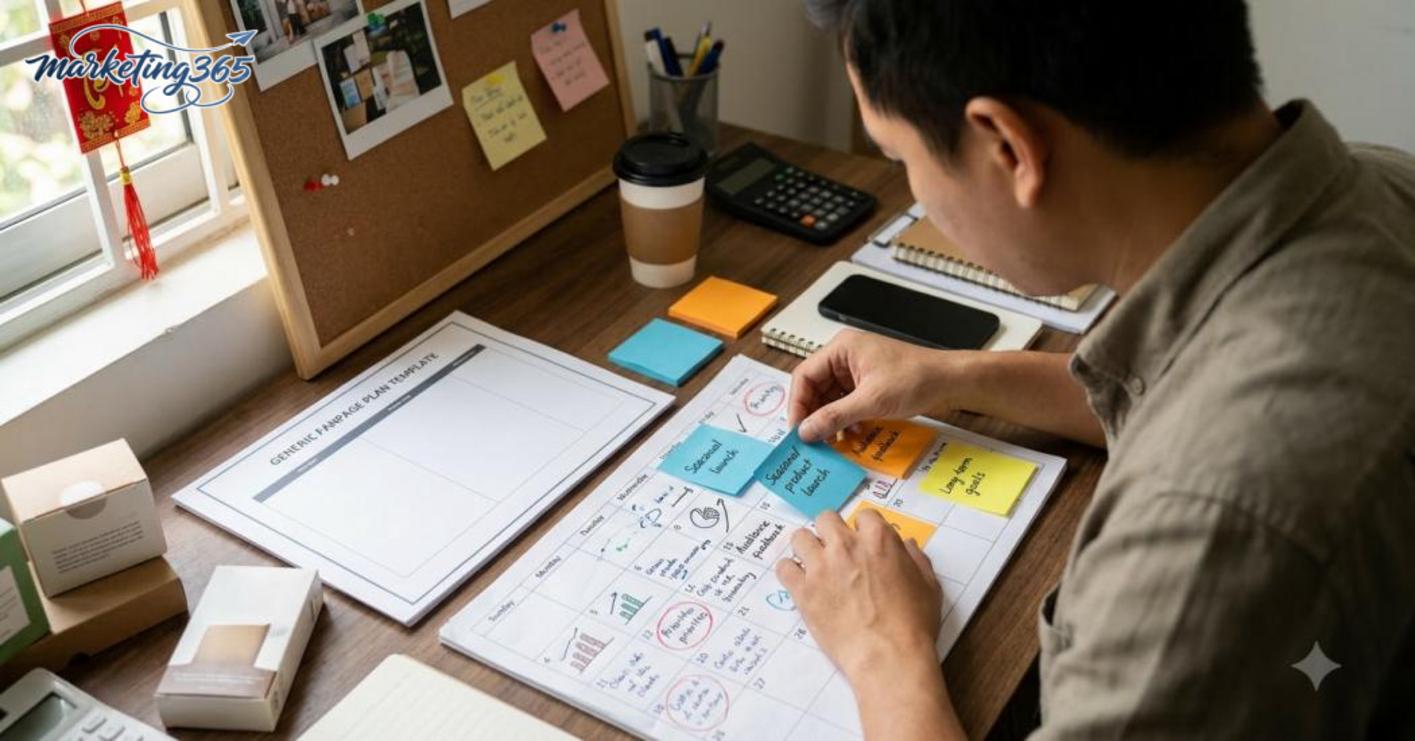
When applied mechanically, a Facebook content plan often gives the feeling that “the plan is there,” but it is hard to sustain over time. For example, a seasonal sales fanpage needs more explanatory posts before peak periods, while a generic template spreads everything evenly across the month. If you do not add fanpage content effectiveness tracking, the content team can easily repeat posts without knowing which ones to keep and which ones to drop.
When do you need to redesign the plan framework from scratch?
You need to redesign the content plan when the fanpage has multiple customer groups, seasonal sales cycles, or products that require detailed explanation before purchase. In that case, simply editing a few lines in the fanpage content plan template is not enough, because how to plan fanpage content by month must reflect the actual reading journey, closing rhythm, and production capacity.
A clear sign is that the team has its own process for approving posts, visuals, or comment replies. At this point, customizing the plan is not just about changing post titles; it also means adapting the content calendar, dividing fanpage content pillars, and resetting weekly priorities. If the fanpage has a separate campaign, it is better to build a plan based on that fanpage’s specifics rather than using a generic template and forcing everything into an existing mold.
Common mistakes to avoid when planning fanpage content by month
The most common mistake in how to plan fanpage content by month is creating a schedule that looks full but cannot actually be executed. A good plan must tie to goals, allocate resources, and measure results after each week. If it is only a list of ideas, the schedule may look good on paper but break down in practice.
What mistake makes a monthly schedule look full but actually unusable?
A monthly schedule that looks “full” but is unusable usually comes from stuffing in too many ideas without locking in the goal for each post. This kind of plan often appears on fanpages with many hard-to-produce formats, such as short videos, carousels, and mini-games, but without a clear owner. As a result, the monthly fanpage posting schedule looks packed, while the execution team has to keep asking for delays.

The fix is to review each post with 3 questions: what goal does this post serve, who will do it, and are the resources sufficient? When building a 30-day fanpage content plan, prioritize formats that can be produced consistently first, then add more labor-intensive formats later. If a post cannot answer these three questions, it should be removed or simplified.
What mistake makes a fanpage repeat itself or lose content rhythm?
A fanpage repeats itself or loses content rhythm when the fanpage post-topic distribution is too heavily weighted toward one angle and similar posts are placed too close together. For example, three consecutive posts that only talk about product benefits will tire readers, while the page lacks transition posts between weeks to regain attention. This is a very common fanpage content mistake in rushed monthly fanpage content calendars.
The fix is to divide fanpage content pillars into clear groups and alternate them by week: introduce the problem, explain, prove, convert. A good 30-day schedule usually has a stable rhythm between sales content, engagement, and useful content. If every week has the same type of post, change the angle or move some similar posts to another week to keep the rhythm natural.
Frequently asked questions about how to plan fanpage content by month
This FAQ section closes the practical decisions in content scheduling: whether you need a plan, how many posts to publish, whether to reuse content, and when to review it. For small fanpages, the goal is to keep a steady rhythm and avoid running out of ideas, not to make the schedule as dense as possible.
Does a small fanpage need a monthly plan?
A small fanpage needs a monthly content plan to keep posting consistently and avoid repeating topics. A simple schedule of 8 to 12 posts per month is enough for many small shops, especially when the team only has 1 writer and 1 designer. With a framework in place, you will know which week is for introduction posts, which week is for Q&A, and which week is for closing sales.
How many posts per month is reasonable?
The number of posts should be based on real production capacity, not a fixed number for every fanpage. For a new fanpage, 3 posts per week is a manageable pace; for a page with a solid content team, 4 to 5 posts per week may be more suitable. For example, a cosmetics shop could maintain 12 posts per month, including 4 consultation posts, 4 sales posts, 2 feedback posts, and 2 mini-game posts.
Should you reuse old content in the new monthly plan?
Yes, if you refresh the angle, examples, or format so the post does not feel repetitive. An old product-introduction post can become a before-and-after comparison post, or be condensed into 5 shorter bullet points. This saves time while still keeping the content useful for followers.
How often should a fanpage content plan be reviewed?
It should be reviewed mid-month and finalized again at the end of the month so the posting schedule can be adjusted in time. When reviewing, look at which posts got the most comments, which posts generated the best messaging volume, and which topics failed to create engagement after 7 to 10 days. If a topic keeps underperforming, replace it with another format such as a carousel, short video, or Q&A post.

When should you revise the whole plan instead of changing individual posts?
You should revise the entire plan when there are changes in products, sales season, or content production budget. For example, if a fashion shop moves from summer items to autumn items, the topic groups, visuals, and calls to action must change too. This keeps the monthly fanpage content plan more closely aligned with business goals.
For official and up-to-date guidance, you can also refer to resources from Meta for Business.
You can find more practical marketing guides at https://marketing365.vn.
Content from marketing365 is created for SMEs, online shop owners, and new marketers.
You can also read more articles on the same topic in the Social Media category.