
Contents
- Social media in the AI era: a game that is harder to trust and harder to verify
- What has changed in social media — and why measurement, control, and accountability are now at stake
- Social media in Vietnam: when proof and safety become competitive advantages
- What social media teams must do to turn trust into usable data
- Reference sources
Social media is entering a phase where reach alone is no longer enough to persuade. As AI accelerates content creation, signal checking, and even the ability to attack systems, Vietnamese marketers must view social media as a problem of evidence, control, and accountability—not just a matter of posting regularly.
Two developments happening at the same time show this clearly: OpenAI says internal evaluations of the Astra model have reached a point where “critical” cyber capability cannot be ruled out, while Fortune and Yahoo Finance both mention a wearable AI device described as a “portable donut” that is rumored to be capable of observing users. On one side, AI is becoming more deeply involved in system safety; on the other, AI is moving closer to everyday life and behavior. For social media, the consequence is not that technology is “hotter,” but that every signal is easier than before to create, distort, or doubt. The key point:
- AI makes social media harder to measure by instinct because signals can be generated faster than they can be verified.
- Trust and proof become prerequisites for content, creators, and social data to have business value.
- The risk is not only bad content, but also systems, access rights, and the way AI is connected to real operations.
- Vietnamese marketers need to shift from “posting to be present” to “posting to prove impact.”
Social media in the AI era: a game that is harder to trust and harder to verify
OpenAI says internal evaluations of the new Astra model show clear progress in agentic coding and cybersecurity capabilities, to the point that the company says it cannot rule out reaching a significant cyber capability threshold under its Preparedness Framework. At the same time, Fortune and Yahoo Finance articles about a wearable AI device described as a “portable donut” show that AI is no longer confined to screens, but is moving into new device layers and interfaces.
For social media, these two signals combine into one major shift: what users see in their feeds can be generated faster, more sophisticatedly, and less verifiably than before. It is not only AI-generated content, but also accounts, comments, engagement signals, and even behavior-shaping actions that can be automated at larger scale. At that point, social media is no longer just a place for marketers to optimize “good content” in the traditional sense. It becomes a place where the authenticity of signals, the safety of the channel, and the accountability of every reported metric must be protected.
What stands out is that OpenAI explicitly emphasizes that sharing with the community is meant to be transparent about capability changes, meaning the developer itself is asking where the risk threshold lies. That is very similar to today’s social media reality: businesses cannot assume that what they see on a dashboard reflects real customer behavior if there is no cross-check mechanism.
What has changed in social media — and why measurement, control, and accountability are now at stake
This is not about which platform launched which feature, but about what has changed around how social media is operated. OpenAI is speaking plainly about Astra’s safety limits, while Fortune and Yahoo Finance show AI moving into new personal-device formats. From that, three changes matter directly to marketers: signals are easier to automate, integration risks are rising, and explaining why a metric increased is no longer as simple as it used to be.
Content verification standards: marketing teams must trust less and check more
OpenAI says internal evaluations of Astra suggest the model may reach a significant cyber capability threshold. That reminds marketers that if AI is powerful enough to support both code and attacks, then social media content creation will also increasingly produce fake signals. A caption, a batch of comments, or a string of interactions that looks natural may not actually reflect real people.

This pushes social media into a new operating standard: content must not only match the brand voice, it must also leave a trace of verification. Which content files were written by humans, which were AI-assisted, and which were reviewed for legal or claim compliance should be clearly recorded in internal workflows. Without that, marketing teams can easily report attractive performance on the surface without being able to prove the campaign’s real impact.
The risk of AI entering personal devices: social media must rethink privacy
Fortune describes an upcoming AI device in the form of a compact wearable or handheld object, while Yahoo Finance repeats the same framing for a personal AI product under discussion. Even if the naming remains speculative, the common thread is that AI is moving out of purely app-based interaction and closer to everyday life. At that point, social media is no longer just reading behavior on a screen; it also risks touching data, context, and privacy at a deeper level.
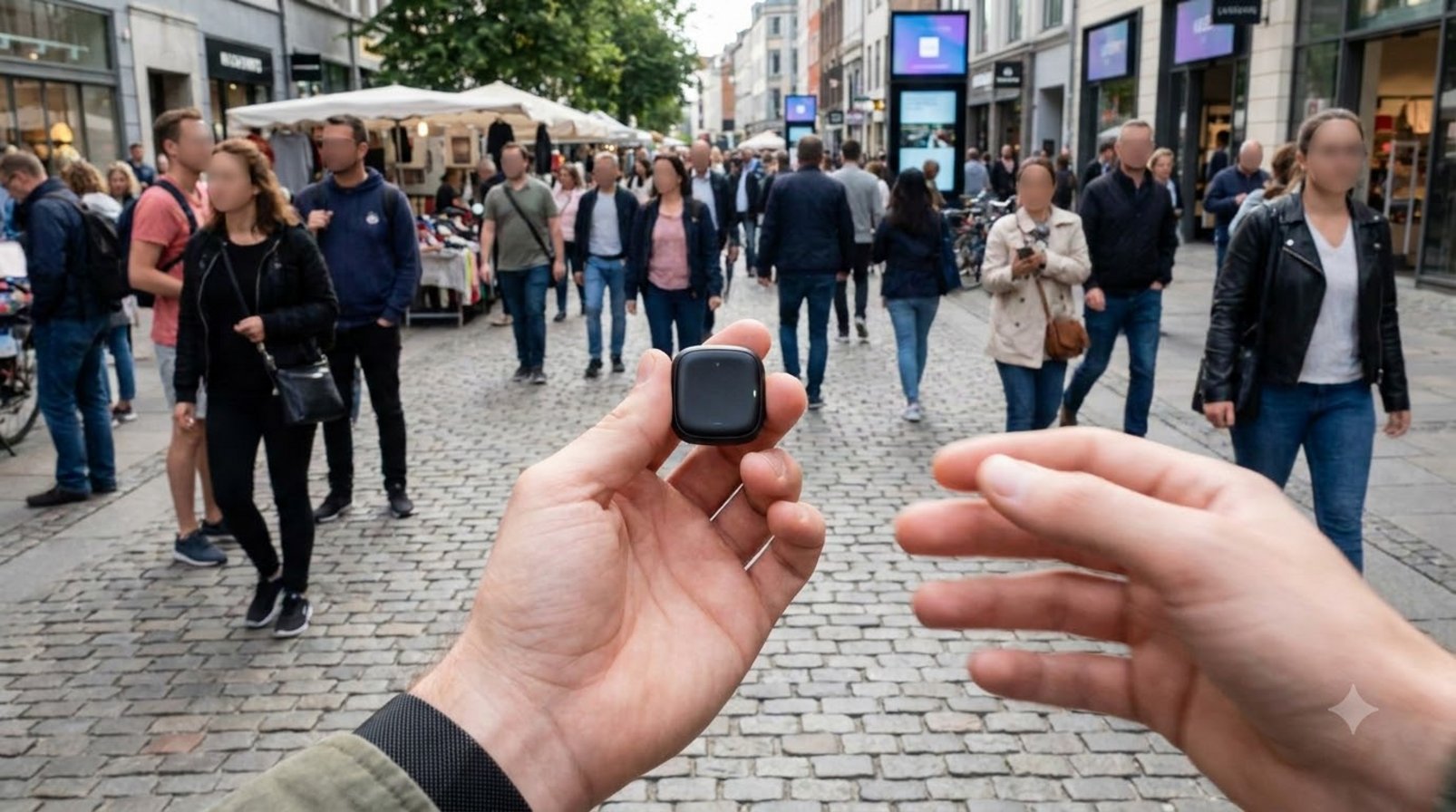
Vietnamese marketers should read this signal in a very practical way: the more AI touchpoints become personal, the more important data minimization, clear consent, and avoiding the merging of too many behavioral data sources into an uncontrolled dashboard become. Otherwise, social media will produce more data, but also more risk—especially when the company has to explain itself to legal, leadership, or partners.
Read more: Volterra’s Global Top 5: Verified Proof Is Redefining Social Media Agencies
Explaining performance: a good metric is not enough if you cannot show how it was created
OpenAI is publicly acknowledging the limits of its model, and that act of disclosure itself is a lesson for social media. A strong metric only has value when the marketing team can explain where it came from, why it increased, and which part was influenced by AI. In an environment where signals can be polluted by bots, auto-generated content, or unusual manipulation, social media reporting must shift from “how much can we measure” to “how can we prove it.”

This is where social media meets content, performance, and risk management at the same time. The more AI is used for production or distribution, the more marketers need to keep logs, note data sources, and set alert thresholds for unusual spikes. The point is not to slow operations down, but to avoid a very costly reality: beautiful numbers on a dashboard that cannot be used in a budget meeting.
Social media in Vietnam: when proof and safety become competitive advantages
In Vietnam, social media is still often bought based on familiar instincts: reach, engagement, KOL/KOC coverage, and only then contribution to sales. But as AI makes social signals easier to create, fake, or distort, businesses will be forced to prioritize data sources that can be verified. This is especially true in sectors that require a high level of accountability, such as finance, education, beauty, health, or consumer goods with sensitive claims.

The important point is that Vietnamese marketers should not see AI only as a tool for writing captions or scheduling posts. The bigger impact is that AI is changing trust in social media data. The side that can prove real signals, real processes, and real control will have an advantage in buying media, persuading leadership, and protecting long-term budgets. For many Vietnamese businesses, this is also an opportunity to turn social media from a “hard to challenge” expense into a system that can be explained and defended.
What social media teams must do to turn trust into usable data
- Review the entire social media workflow to clearly separate what is done by people, what is AI-assisted, and what must be reviewed before publishing.
- Reset reporting standards: every increase in a metric must come with its source, context, and a way to check whether the signal is real.
- Reduce dependence on a single data layer. Combine social listening, website analytics, CRM, and sales data to avoid the illusion created by one dashboard.
- In Vietnam, prioritize campaigns that can be explained more clearly to leadership, partners, and legal teams, especially when using creators, UGC, or AI-assisted content.
Social media does not lose value because of AI. It simply shifts in value from “noise” to “trust.” Whoever can measure that trust will have a real advantage, while whoever only counts views will find it increasingly difficult to explain why a campaign looks good but still fails to deliver business results.
See more marketing analysis and guides at https://marketing365.vn.
Follow more analysis from Marketing365 to stay updated on the latest marketing trends.
Read more articles in the same category at Digital Trends.
Reference sources
- OpenAI — Responding to the next frontier of critical cyber capabilities
- Fortune — OpenAI’s new device is reportedly a $300 portable donut that watches you
- Yahoo Finance — OpenAI says its upcoming Astra model may have ‘critical’ cybersecurity capabilities amid rash of AI model hacks