

Contents
- AI and social media: the context has shifted from experimentation to everyday operations
- What has just changed in AI social media — and how it is forcing marketing teams to work differently
- AI in social media: process, roles, and review are the deciding factors
- Social media in Vietnam: small teams can move faster if they standardize AI
- To make AI on social media effective, do these four things
- References
AI is no longer an experiment outside the social media workflow. As most marketers already use AI every day and small teams are also beginning to rely on it to work faster, the question is no longer “whether to use it” but “which process to put AI into, who reviews it, and how to maintain quality.” For Vietnamese marketers, this is a very practical shift because it directly affects content production speed, staffing costs, and the level of brand control.
This picture does not come from just one source. Social Media Examiner’s report shows that AI has become part of marketers’ daily work habits, with most respondents coming from very small businesses; meanwhile, Exploding Topics shows that marketing conferences continue to be where teams relearn skills and new methods. Together, these two signals point to one thing: social media no longer runs on scattered inspiration, but on a process that knows how to use AI in the right place and control the output.
- Key point:
- AI has become part of daily work, no longer a side experiment.
- The biggest value is not “creating content faster,” but organizing the workflow, review process, and role assignments.
- Small teams have an advantage if they know how to use AI to save labor while still maintaining output quality.
- For the Vietnamese market, the important task is standardizing how AI is used before scaling social media budgets.
AI and social media: the context has shifted from experimentation to everyday operations
What stands out in Social Media Examiner’s data is that AI has moved from being “a tool worth trying” to part of marketers’ everyday work habits, with daily usage rising sharply over the past two years. The report also makes clear that most participants came from businesses with 10 employees or fewer, so this is not just a story about large corporations. In other words, small-business social media is following a trajectory similar to larger markets: doing more with fewer people. Source: Social Media Examiner.
At a broader level, the 2026 marketing conferences compiled by Exploding Topics show that the need to relearn marketing methods remains very high. When knowledge, benchmarks, and techniques change quickly, marketers cannot keep a fixed content rhythm and wait for results to appear on their own. Source: Exploding Topics.
What the two sources have in common is that social media is being pulled into a new working environment: higher speed, thinner resources, and a clearer requirement for who is responsible for the final quality. AI does not replace the marketing team. It forces the marketing team to operate with more discipline.
What has just changed in AI social media — and how it is forcing marketing teams to work differently
This section is not about isolated news items. It is about changes that are now clear enough for marketers to adjust their working methods immediately.
Daily AI use: social media teams must treat it as a standard tool, not a side trick
Social Media Examiner’s data shows that AI has become part of the regular workflow for many marketers. When most practitioners are already using it every day, the question is no longer whether AI should be turned on, but where to place it: idea outlining, draft writing, comment categorization, or suggesting content variations. The essence of this shift is that AI has become an operational support layer, not a magic replacement for people. Source: Social Media Examiner.

For social media teams, the practical consequence is the need to standardize prompts, review templates, and approval thresholds. Without that, faster output will also bring repeated errors, off-brand tone, and inconsistent content.
Very small businesses: the advantage lies in saving labor, not posting more
Read more: How AI Is Changing Social Media Marketing Sales
The valuable point in Social Media Examiner’s report is that most respondents came from small businesses. This shows that AI is helping lean teams handle a workload that previously required more people. But saving labor does not mean mass-producing content. For social media, the real advantage is that a small team can keep a steady rhythm, test more content angles, and spend time on the human parts: refining language, responding to comments, and tracking community reactions. Source: Social Media Examiner.

So the KPI should shift from “how many posts are produced” to “how many posts can pass through a lean review process while still maintaining quality.”
Marketing conferences and learning resources: social media skills now need constant updating
Exploding Topics emphasizes the value of marketing conferences in helping professionals learn directly from experts and update their methods. This reflects a broader reality: social media skills no longer stay still for 6–12 months. As AI, measurement tools, and content standards all change quickly, marketing teams need a rhythm of relearning. Source: Exploding Topics.
For businesses, this leads to one very concrete task: making room in the workflow for short training sessions, periodic reviews, and updated content checklists. Otherwise, AI can easily be used according to personal habits rather than the brand’s standards.
AI in social media: process, roles, and review are the deciding factors
Together, the two sources make one clear point: the benefit of AI is not “working faster” in a vague sense, but reorganizing the workflow. Social media is where this becomes visible early because content moves quickly, responses are public, and brand risk is easy to create if the tone, context, or facts are wrong.
Content approval: the draft creator should be separated from the final publisher
When AI is used regularly, the biggest risk is not being unable to write posts, but writing them too quickly. Social Media Examiner’s report shows that AI is now a normal part of marketers’ work; that makes the approval step more important, not less, than the creation step. The draft creator can be AI-assisted. The person who approves publication must still be someone who understands strategy, brand voice, and community context. Source: Social Media Examiner.
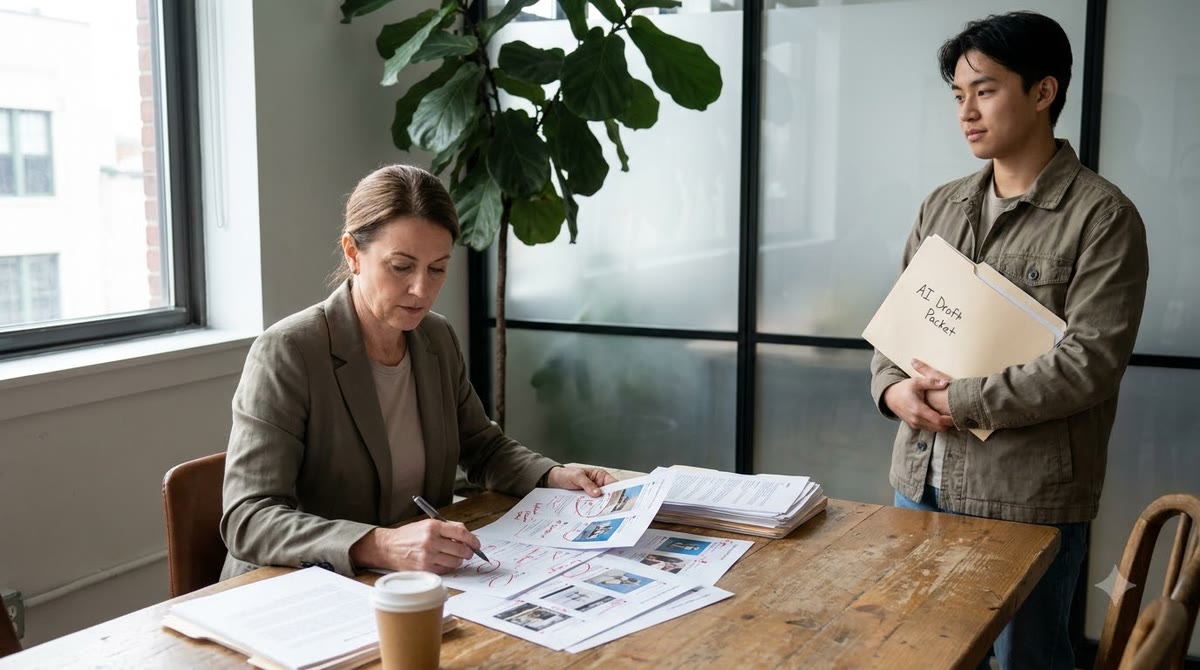
This is a change in roles, not just tools. Social media teams need a clear final review step for captions, creatives, CTAs, and comment responses.
The relearning rhythm: social media needs systematization, not dependence on a few strong individuals
Exploding Topics shows that marketing conferences still matter because professionals need a place to update their practices, not just read scattered materials. For social media, this highlights one point: any marketing team that depends too heavily on a few “expert” individuals will fall behind more easily when tools change. A more sustainable approach is to rewrite SOPs, save strong prompts, standardize evaluation rubrics, and share methods across the team. Source: Exploding Topics.
Read more: Why the AI Infrastructure Funding Wave Is Changing Social Media
In short, AI is pulling social media from a work model based on individual capability to one based on systems.
Social media in Vietnam: small teams can move faster if they standardize AI
In Vietnam, most businesses are still small or medium-sized, so the context from Social Media Examiner is highly relevant: few people, but many tasks to handle. This is where AI can create a real advantage, as long as businesses do not use it as a way to “make up for quality with quantity.”
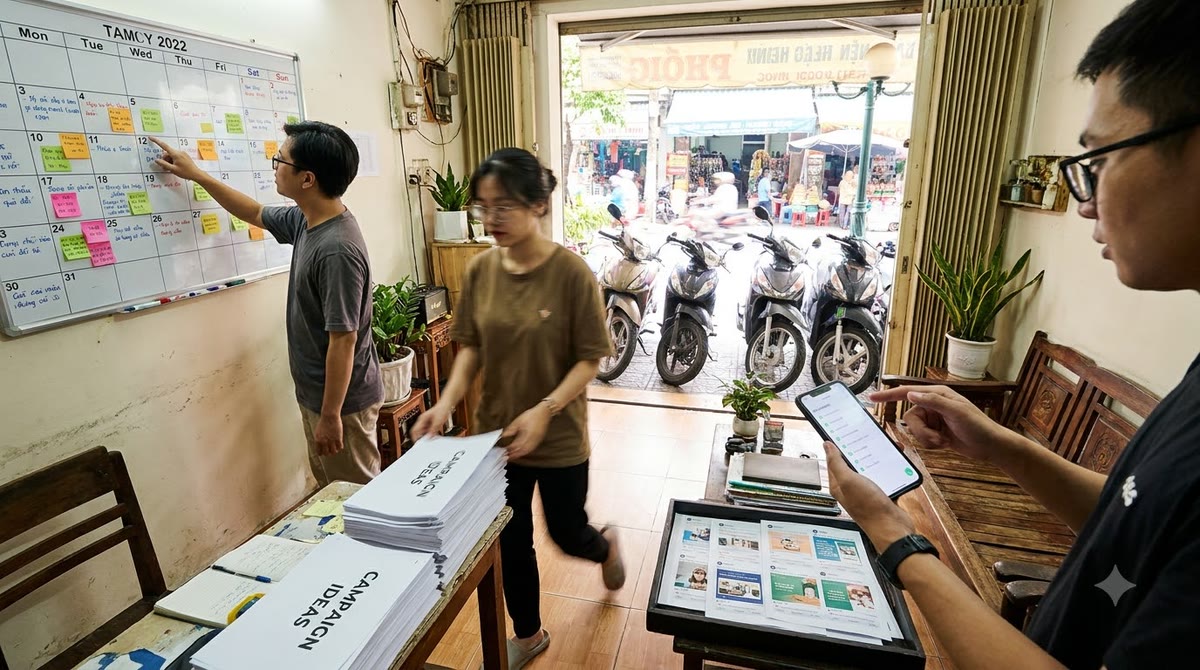
The bottleneck is usually not a lack of tools. It is that the team does not yet have clear rules: which content can be AI-assisted, which content must be written by hand, which drafts need human review, and when AI should not be used because the content involves legal issues, pricing, or the brand’s commitments. For social media in Vietnam, standardizing early will help small businesses work more consistently, respond faster, and rely less on one person who knows everything. When budgets are still limited, that is the practical way to improve efficiency.
To make AI on social media effective, do these four things
- Clearly define 3–4 stages where AI is allowed: idea drafts, caption variations, response summaries, and posting schedule suggestions.
- Write a short content review checklist for brand voice, facts, CTA, and risk level before publishing.
- Save prompts, post templates, and internal scoring criteria so the team does not depend on one strong performer.
- Set aside regular relearning time for the social media team instead of waiting until performance drops to make changes.
AI on social media is no longer a story about the near future. It has already become part of the daily workflow, especially for small teams. The win does not come from using more tools, but from reorganizing the process so AI handles the fast parts, while people keep control of the hard parts: review, context, and brand trust.
See more marketing analysis and guides at https://marketing365.vn.
Follow more analysis articles from Marketing365 to stay updated on the latest marketing trends.
Read more articles in the same category at Digital Trends.
References
- Social Media Examiner — How Small Businesses Are Really Using AI: 5 Eye-Opening Findings
- Exploding Topics — Top Marketing Conferences to Attend in 2026