Contents
Levi Strauss’s 2026 results — direct-to-consumer online revenue up 19%, nearly double the company’s overall growth even as promotions were cut — show that durable ecommerce growth comes from experience and data rather than discounts. Set against the rise of AI shopping agents, it is a reminder for Vietnamese marketers that the coming advantage lies in owning the direct purchase journey and being “seen” correctly by AI.
Key points
- Levi Strauss recorded 19% online revenue growth in Q2, outpacing the group’s overall growth rate.
- The momentum came from website improvements, a better online product assortment, and higher conversion efficiency, even as the company reduced promotions.
- The trend of shopping with AI shopping agents is emerging and could change how consumers search and make purchase decisions.
- For the Vietnamese market, these two developments show that brands need to invest simultaneously in DTC, digital content, and being “discoverable” in AI-assisted shopping environments.
Levi Strauss accelerates ecommerce thanks to its DTC strategy
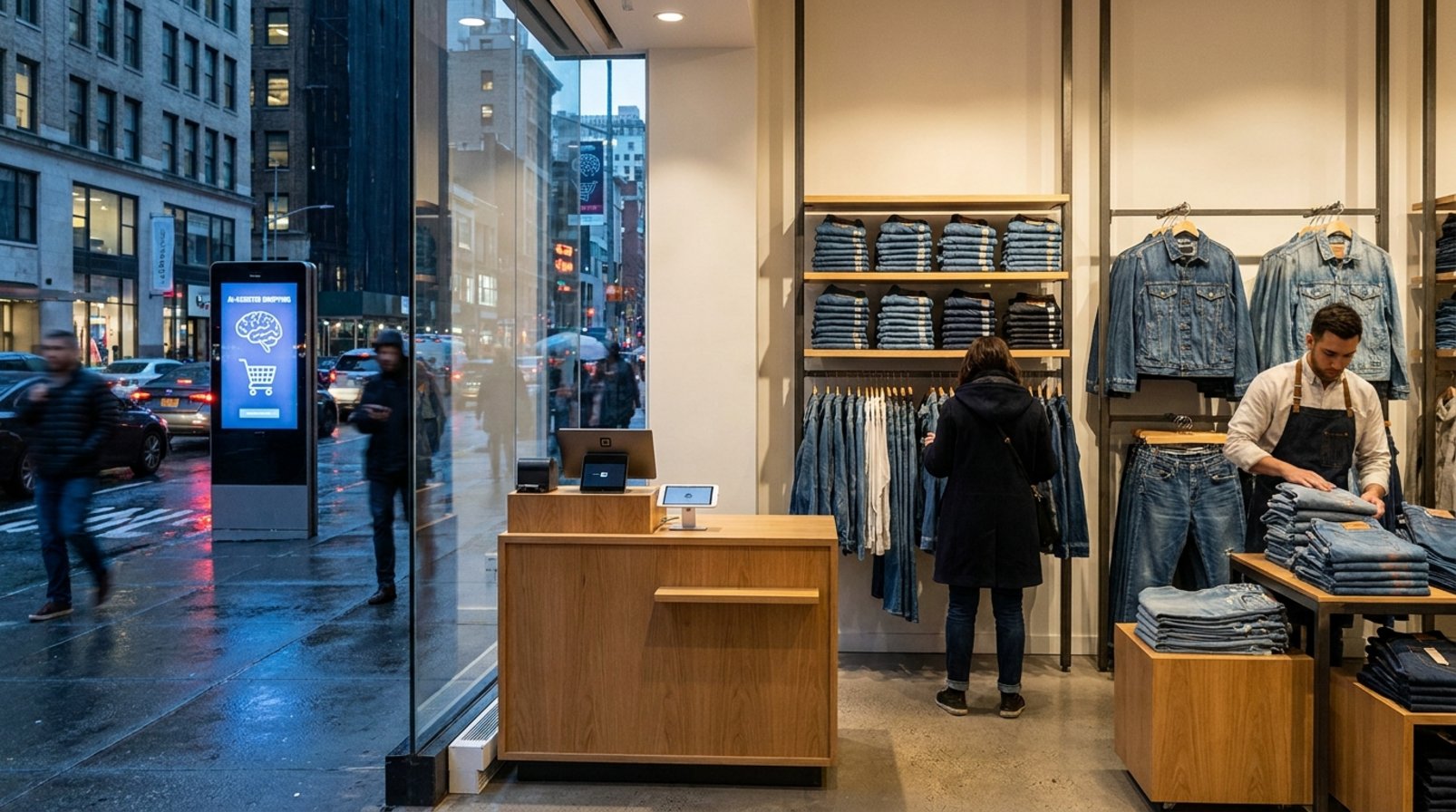
According to Digital Commerce 360, Levi Strauss & Co. ended its second fiscal quarter with net revenue of $1.56 billion, up 8% year over year. More notably, online revenue in the direct-to-consumer (DTC) channel rose 19%, nearly double the company’s overall growth rate.
During the earnings call, CEO Michelle Gass said the growth came from improving the website experience and upgrading the online product assortment to make it more appealing. Key metrics such as traffic, conversion rate, items per order, and average order value all improved. What is notable is that this growth still happened even as Levi Strauss reduced promotional activity on its website.
This development shows a familiar but still relevant lesson: sustainable ecommerce growth does not rely on discounts alone. When a brand controls the direct purchase journey well, optimizes product presentation, and makes the website more convenient, revenue can rise even in a less promotion-dependent environment. Source: Digital Commerce 360, 10/7/2026.
AI shopping agents are starting to create new pressure on ecommerce
The second source from MSN reflects a more important structural shift: ecommerce is facing change as AI shopping agents gain increasing attention. Although the original article does not go deep into numbers, the main message is clear: consumers may soon rely on AI assistants to find products, compare options, and shorten the purchase decision process.

For brands and retailers, this means the “battle” is no longer taking place only on the website interface or in paid advertising. Product content, data structure, clarity of information, user reviews, and the ability to appear in AI-supported ecosystems will become more important. If marketers previously optimized for search engines and social commerce, the next phase may require optimizing for “AI discovery” as well — how products are understood by AI, recommended, and included in lists of options.
This is a trend especially worth watching in industries with many similar choices, long consideration cycles, or strong dependence on price comparisons, features, and community reviews. As AI becomes an intermediary layer in the shopping journey, the brand with clearer data and a stronger digital presence will have a greater advantage. Source: MSN, a roundup on AI shopping agents.
Read more: AI Is Reshaping Ads, Email, and Marketer Skills
Read more: Facebook Ads for eCommerce: Lessons from a 4-Stage Scaling Model
Digital retail: standardize product data and prepare for AI shopping agents
These two stories show that the broader picture of digital retail is shifting in two parallel directions: first, strengthening DTC capabilities to control experience and margins; second, preparing for an AI-assisted shopping era. For Vietnamese businesses, this means they cannot focus only on running ads or pushing short-term promotions.

The priority should be a standardized product content and data system, a website or owned platform with a strong user experience, clear information, trustworthy reviews, and smooth conversion. At the same time, brands should closely monitor how users search on social media, marketplaces, and AI tools to adjust content, SEO, and social commerce strategies. In an increasingly automated competitive environment, the brand that helps customers buy faster, understand more clearly, and trust more will be the one that wins.
Explore more marketing analysis & guides at Marketing365.
Follow Marketing365 for in-depth marketing analysis and practical guides.
Read more articles in the same category Digital Trends.
This article focuses on social media and ecommerce with a perspective for the Vietnamese market.
References
- Digital Commerce 360 — Levi Strauss ecommerce sales jump 19% as DTC strategy boosts Q2 growth
- MSN — Ecommerce faces shake-up as AI shopping agents gain ground